| The Public Paperfolding History Project
Last updated 20/1/2026 x |
|||||||
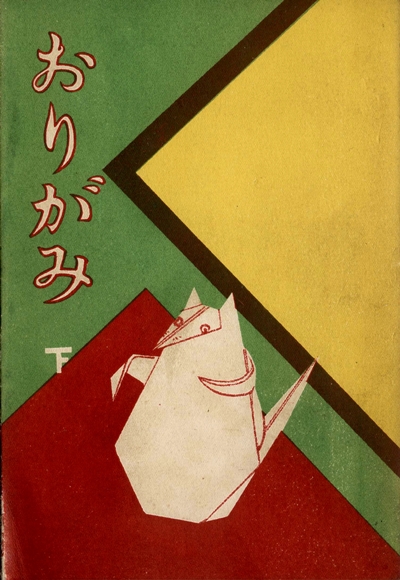
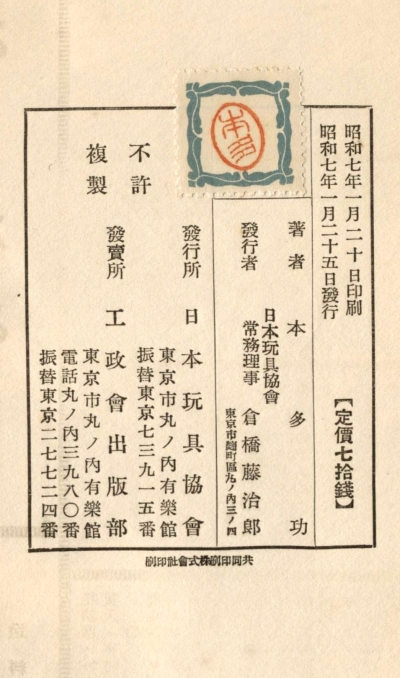
| Origami Part 2 (lower) by Isao Honda, 1932 | |||||||
| 'Origami
(lower)' (Part 2) by Isao Honda was published in Japan in
1932. The book is split into a main work and a
supplement. According to the author's Preface the first nine designs are Honda's own original work. My grateful thanks to Lorenzo Lucioni for letting me see a copy of this work. My grateful thanks to Nobuko Okabe for helping me understand the meaning of the Preface. **********
**********
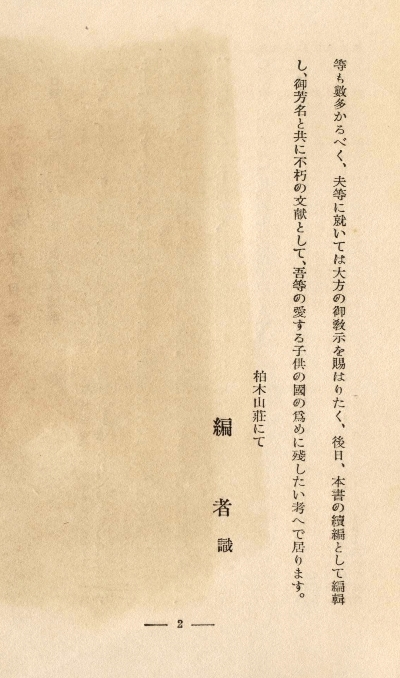
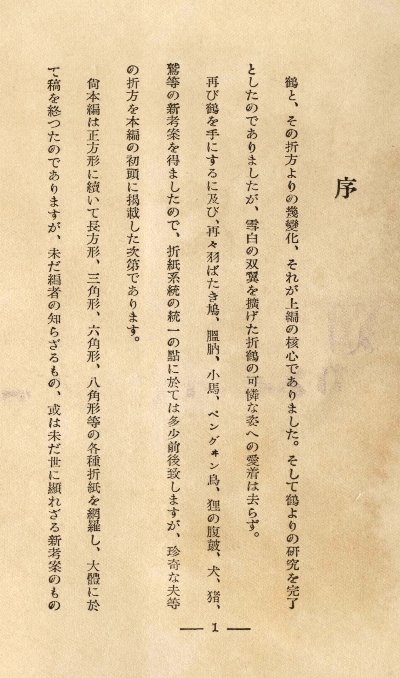
********** The Preface reads (roughly translated): 'In the first volume of this series, the Crane and some variations of its folding were the central point. And there, I decided that I had completed the study that was based on the Crane. But I could not keep my thoughts away from the beautiful form of the origami crane with its pure white wings spread. As I picked up the crane again, I got some new ideas for a flapping dove, seal, penguin, racoon dog belly drum, dog, wild boar, eagle, etc. Although they are somewhat out of position in terms of the consistency of (my) origami system, I listed those rare folding methods in the beginning part of this volume. I finished this volume covering various types of origami paper other than square, such as rectangle, triangle, hexagon, octagon, etc. But I think there must be many things that I don’t know and many newly designed things that haven’t come out yet. I would appreciate it if you could point out / teach them to me. Then, I will later compile them with your name and publish them as the next volume of this book and leave them as an eternal reference for the precious children of our nation. Editor'
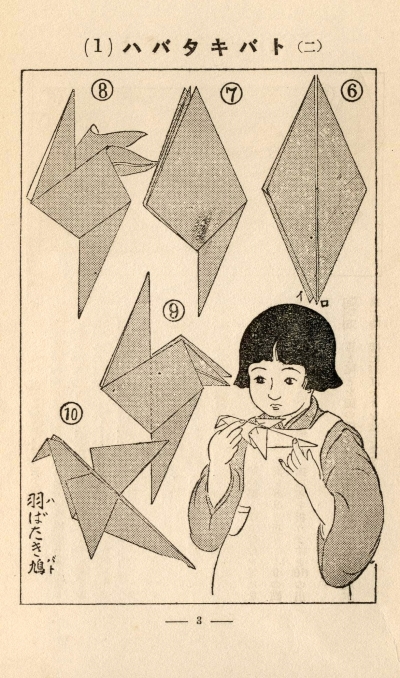
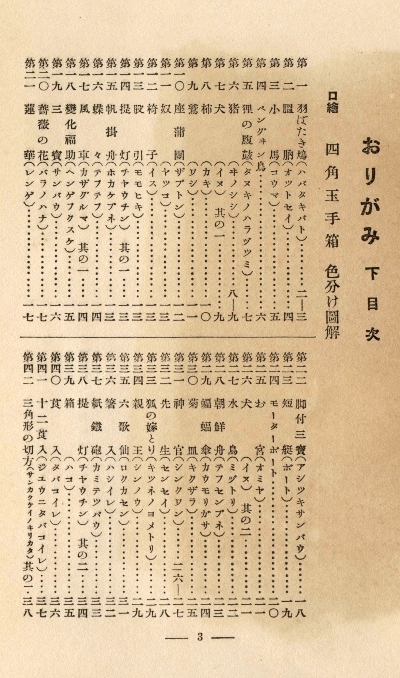
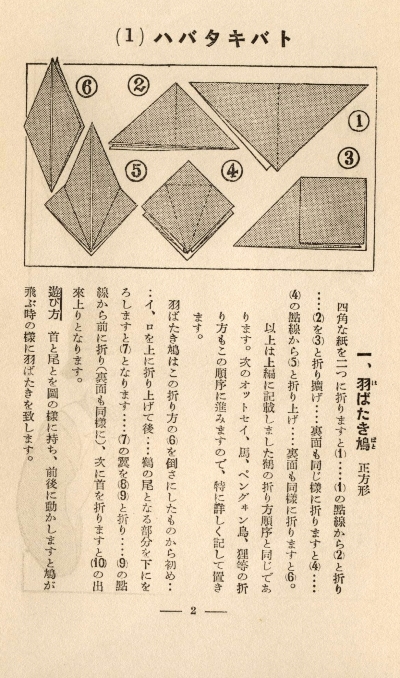
********** Analysis The Main Work Honda's Preface states that he has added some of his new designs developed from the bird base to the beginning of the work, and that these are out of order in respect of his origami system. It seems to me that his origami system begins with design 10, the Zabuton, and that the previous 9 designs, which are all developed from the bird base, though sometiimes via the frog base, are therefore to be considered his own original work. Honda lists 7 of these and adds 'etc' to the end of the list. The designs not specifically named in this list are the Horse and the Persimmon, but it seems clear that he intended his claim of authorship to extend to them as well. ********** 1. The Turtle Dove - Honda's Flapping Dove
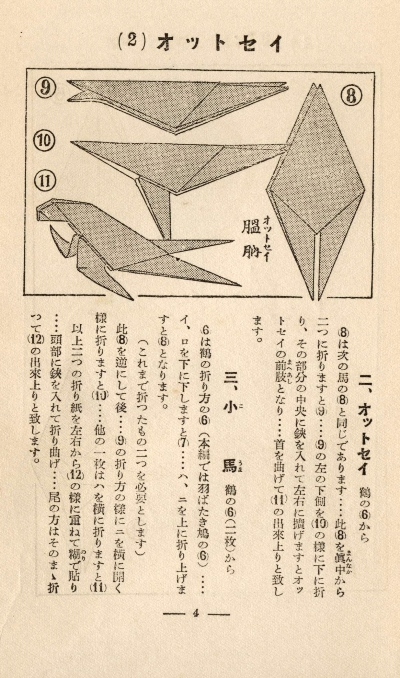
********** 2. Fur Seal (cut) - Honda's Cut Bird Base Seal From a bird base. A cut is used to separate the front legs.
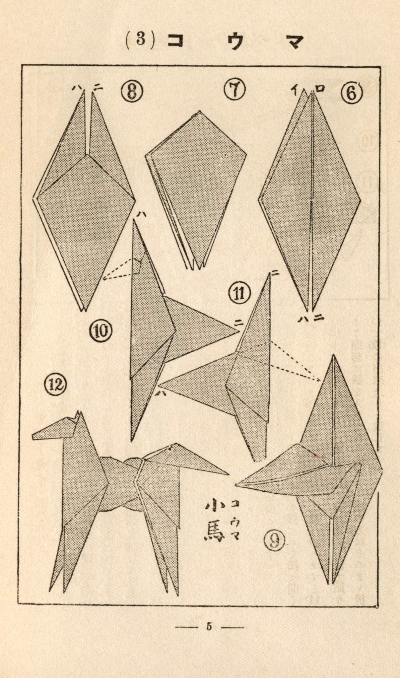
********** 3. Horse - Honda's Compound Horse From two bird bases glued together.
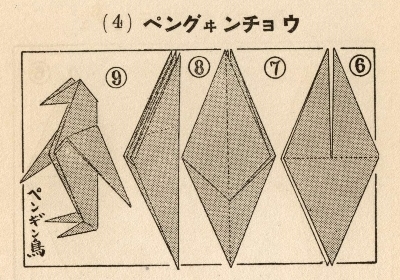
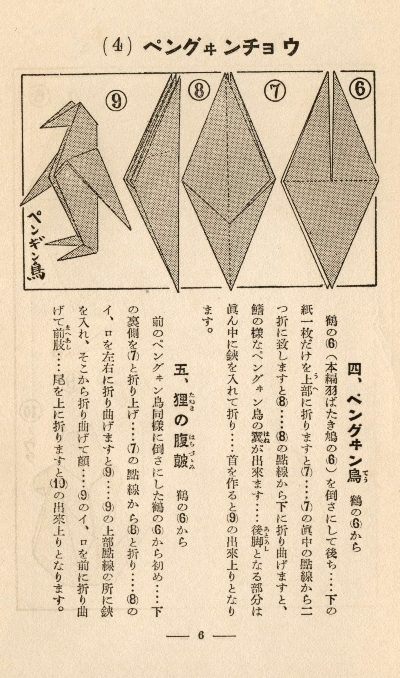
********** 4. Honda's Cut Bird Base Penguin The feet are separated by a cut.
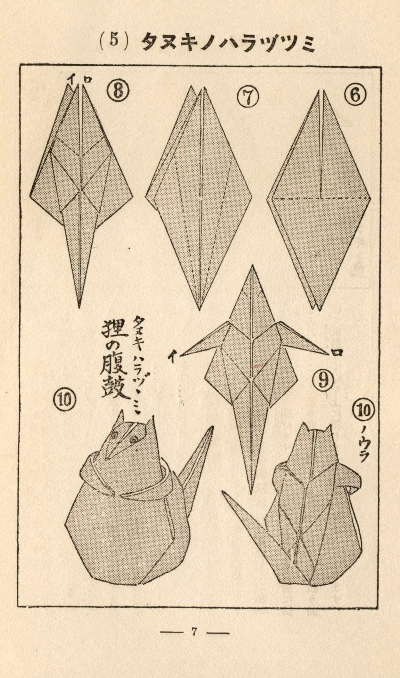
********** 5. Tanuki no Harazutsumi - Honda's Raccoon dog belly drum) Cuts are used to create the ears
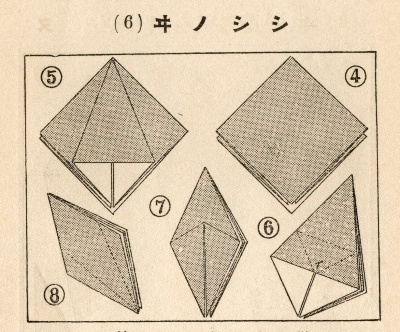
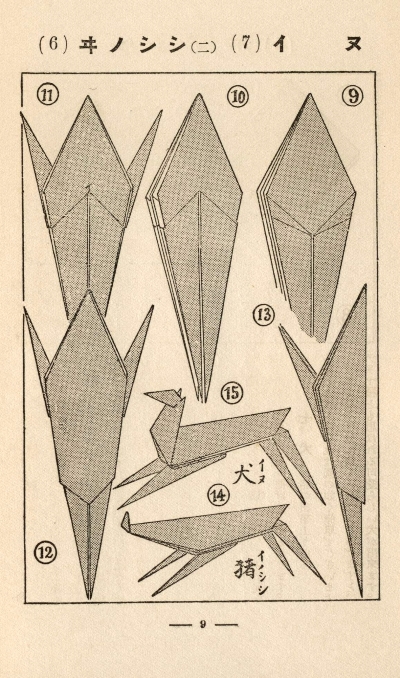
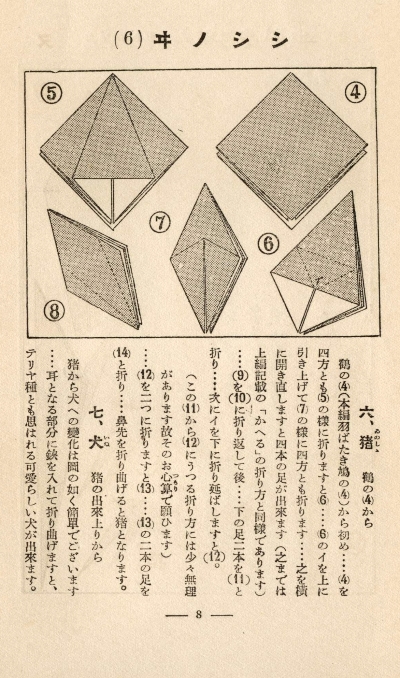
********** 6. Honda's Frog Base Wild Boar and 7. Honda's Frog Base Dog
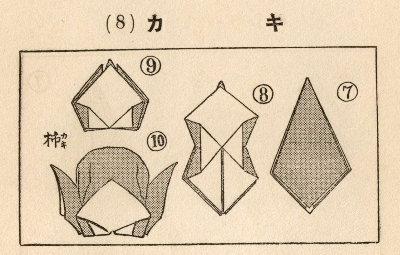
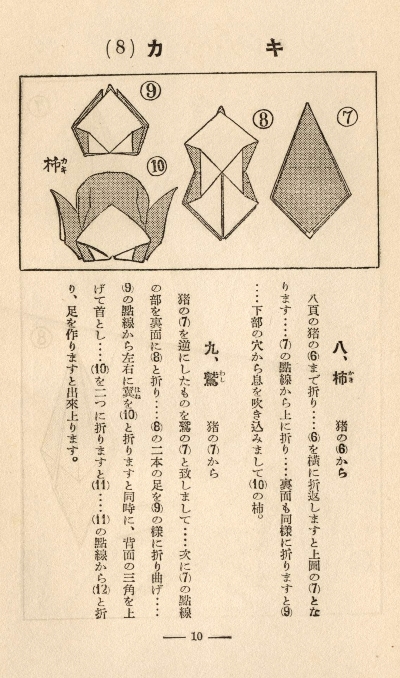
********** 8. Honda's Persimmon
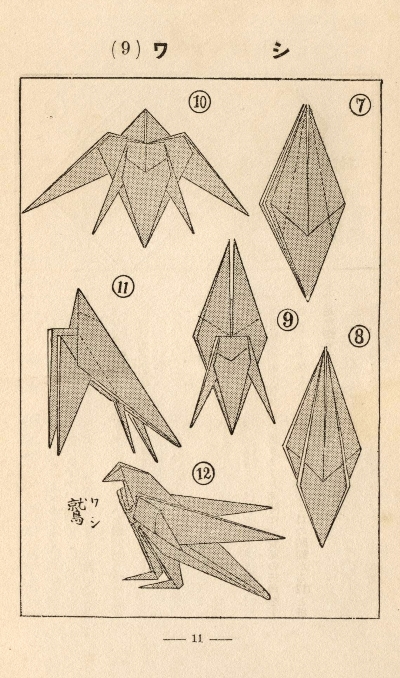
********** 9. Honda's Frog Base Eagle
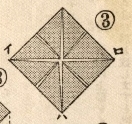
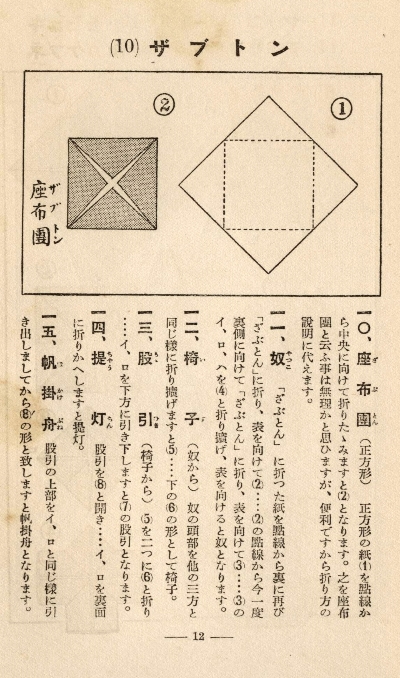
********** 10. Zabuton (square floor cushion) - ie The Triple Blintz Basic Form. The way in which the following sequence of forms is developed from this form is a little unusual at times.
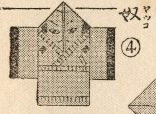
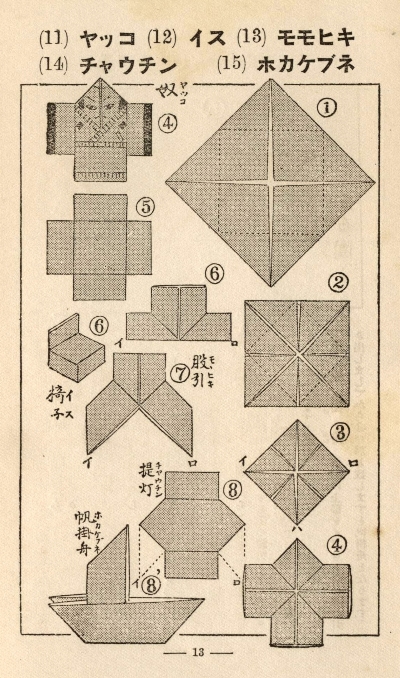
********** 11. Yakko - Yakkosan
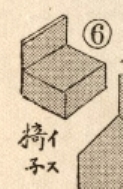
********** 12. Chair - The Low Chair
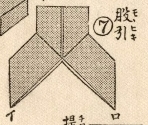
********** 13. Momohiki - The Trousers
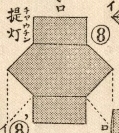
********** 14. Chochin (Lantern) - a version of The Muff
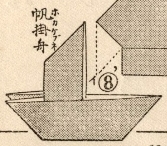
********** 15. Hokakebune - The Boat with Sail
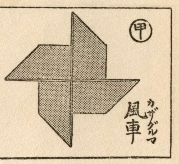
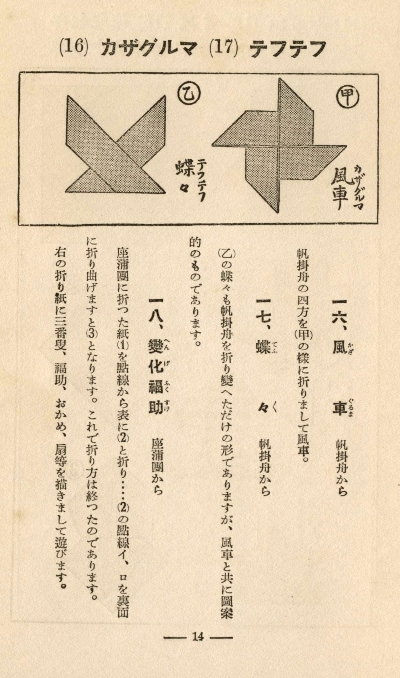
********** 16. Windmill - The Windmill
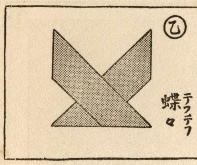
********** 17. Butterfly - The Vase
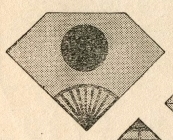
********** 18. Picture forms from the Double Blintz Basic Form Fan
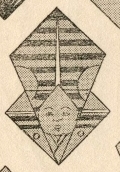
*** Okame
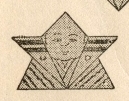
*** Sanbaso
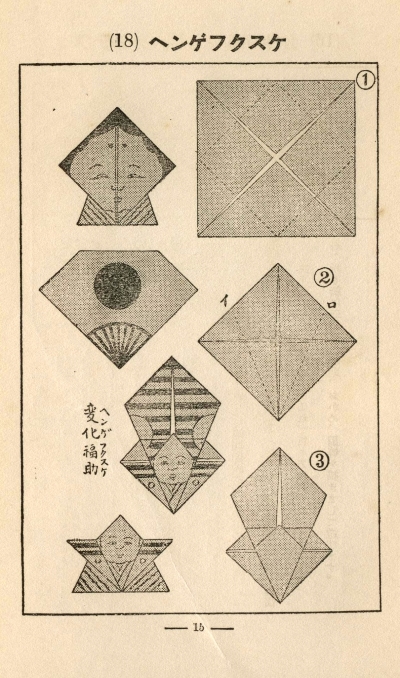
*** Fukusuke - Simple Fukusuke
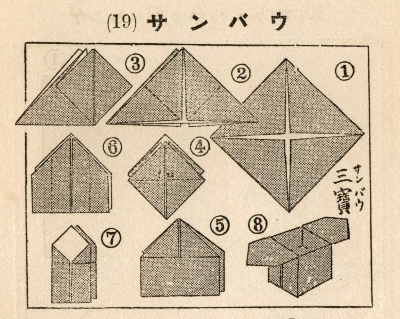
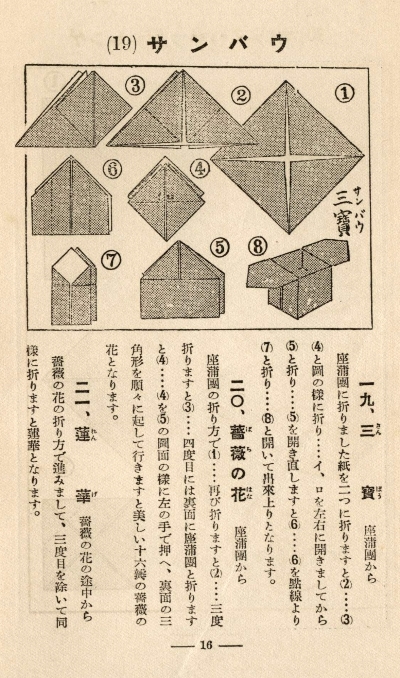
********** 19. Sanbo - The Sanbo
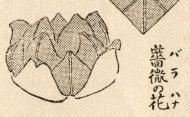
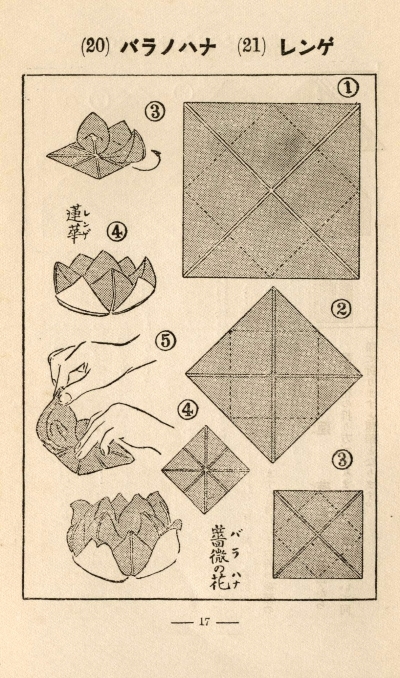
********** 20. Baranohana (Rose) - The Lotus (from a triply blintzed square)
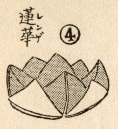
********** 21. Lotus - (from a doubly blintzed square)
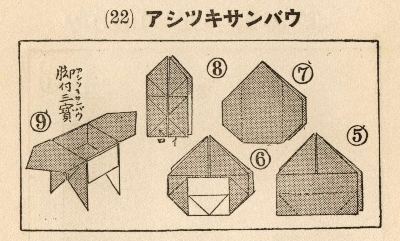
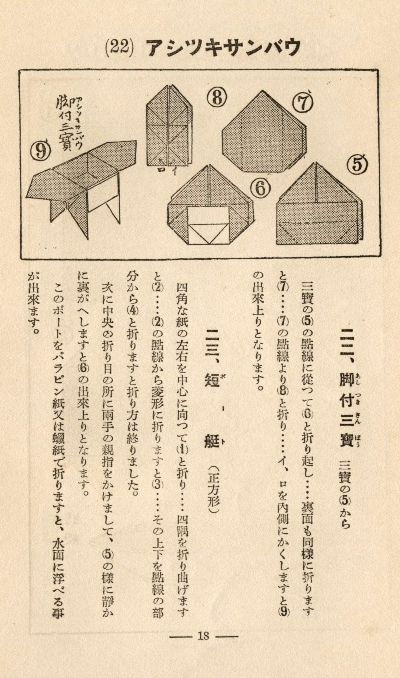
********** 22. The Sanbo on Legs
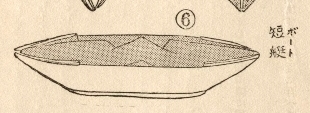
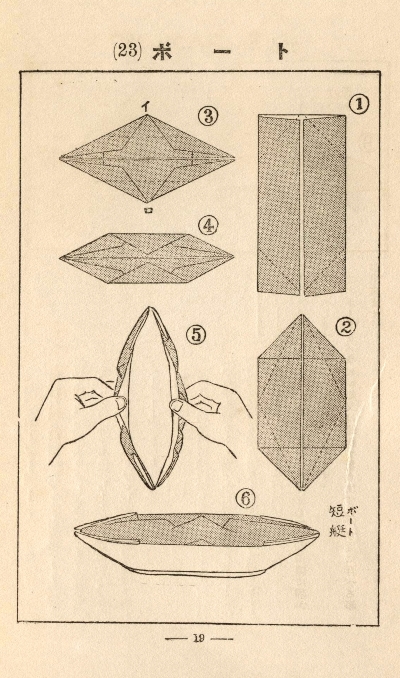
********** 23. The Inside-Out Boat
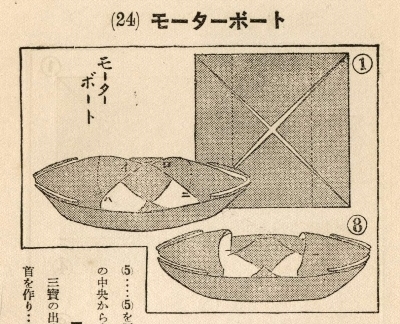
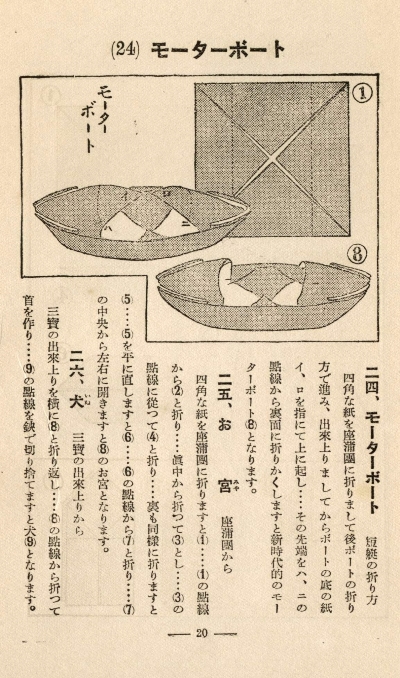
********** 24. Fishing Boat - The Rainy Day Boat / The Sampan
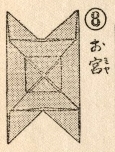
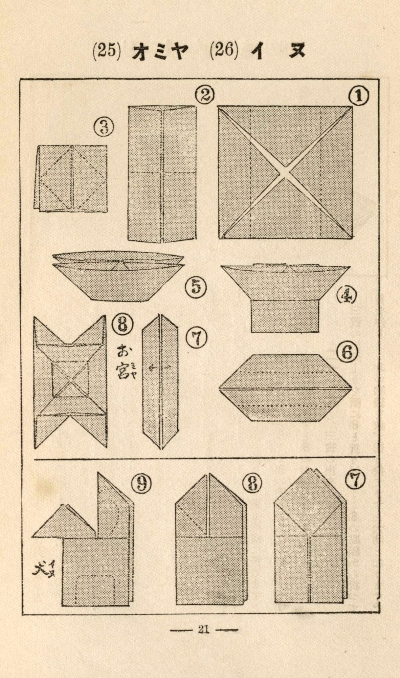
********** 25. Omiya - The Tenjin Shrine
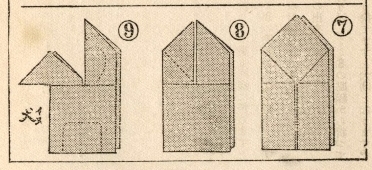
********** 26. Dog - The Cut Sanbo Dog Developed from the Sanbo using cuts
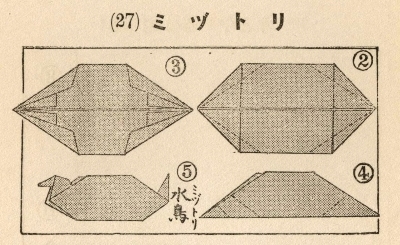
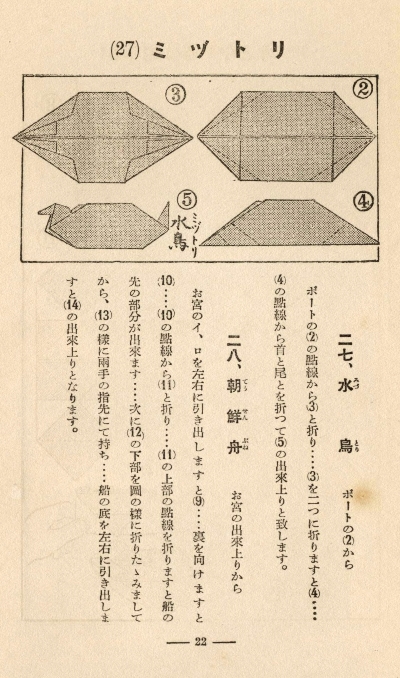
********** 27. Mizutori (water bird)
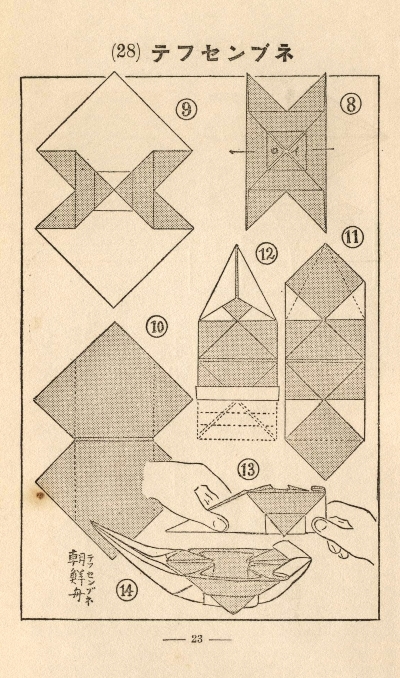
********** 28. Tehsenbune (Battleship) - The Takarabune
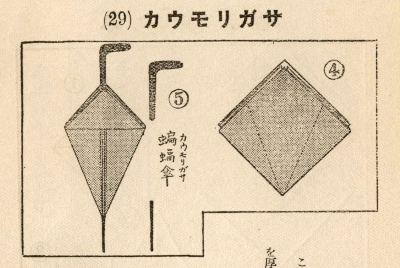
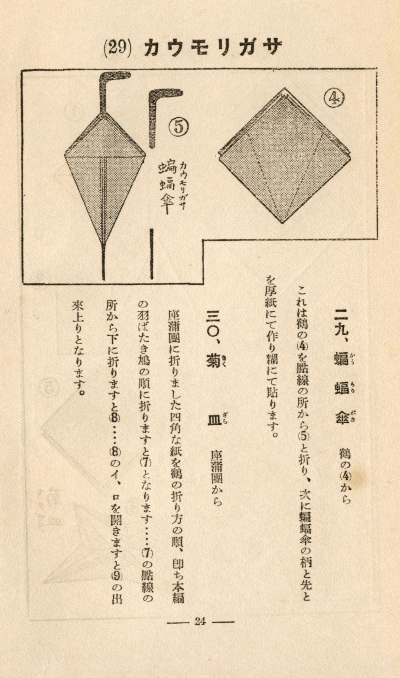
********** 29. Umbrella The handle and rod are made from cardboard.
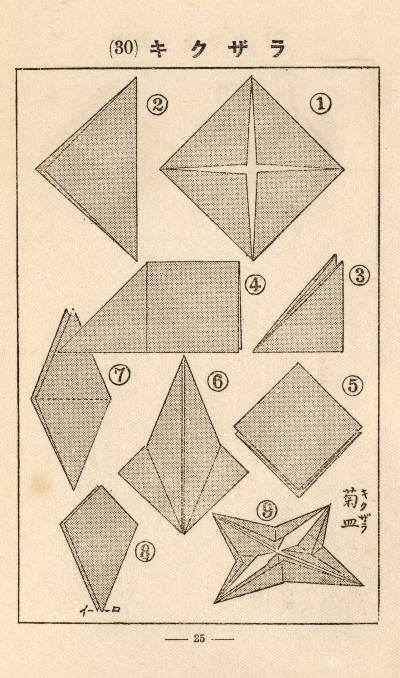
********** 30. Kikuzara - The Kikuzara
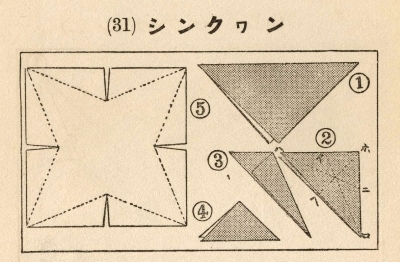
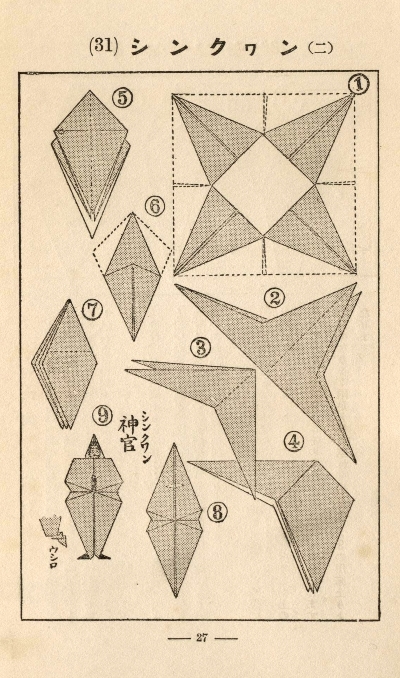
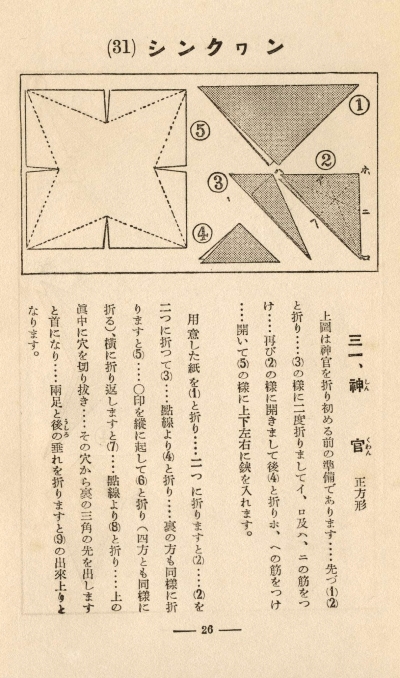
********** 31. Shinkuwan (Priest) - Made from a slit square base.
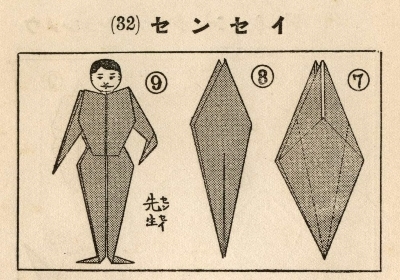
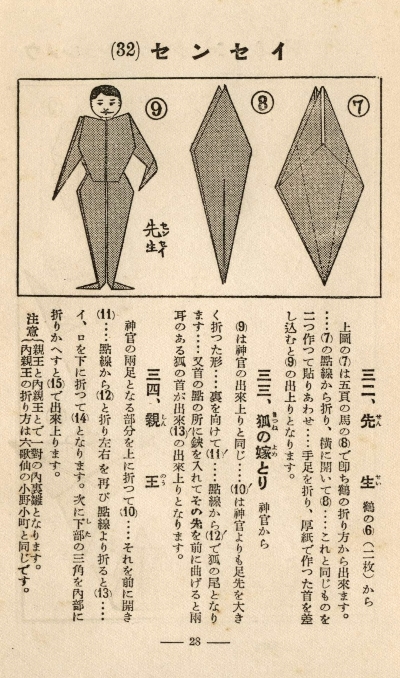
********** 32. Sensei (compound figure) This is a compound design made from two bird bases glued together. The head is made separately and glued on.
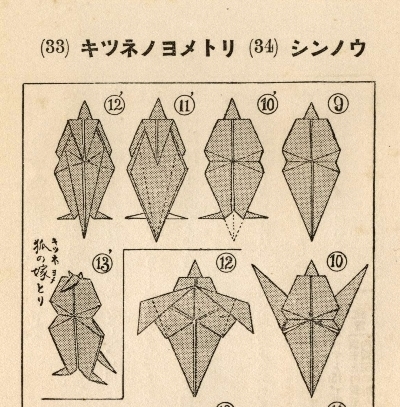
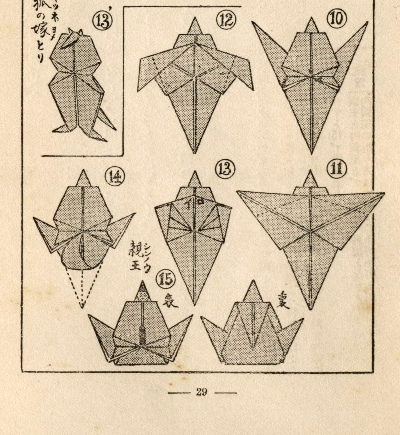
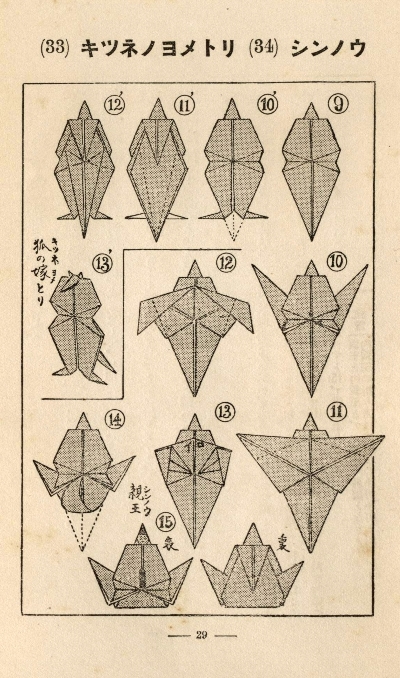
********** 33. Fox Bride Developed from Shinkuwan (no 31) Cuts are used to create the ears
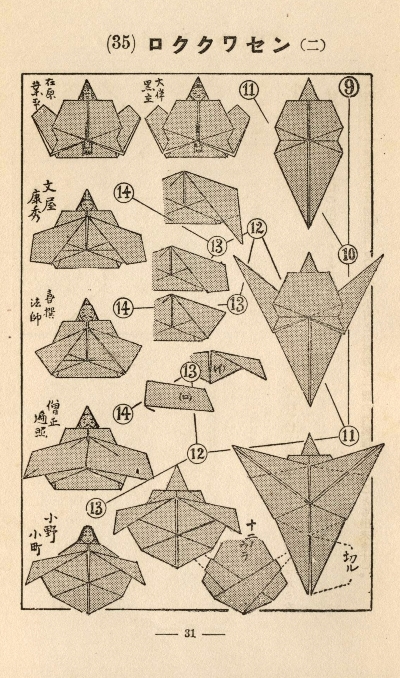
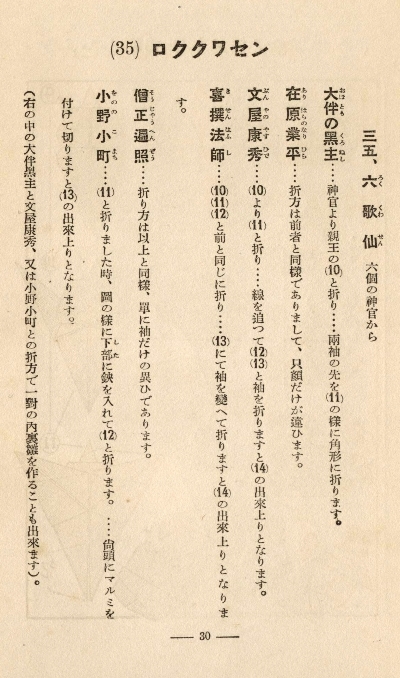
********** 34 and 35. The six poets. Developed from Shinkuwan (no 31) Some of the figures are cut.
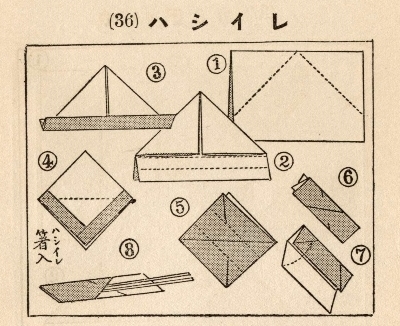
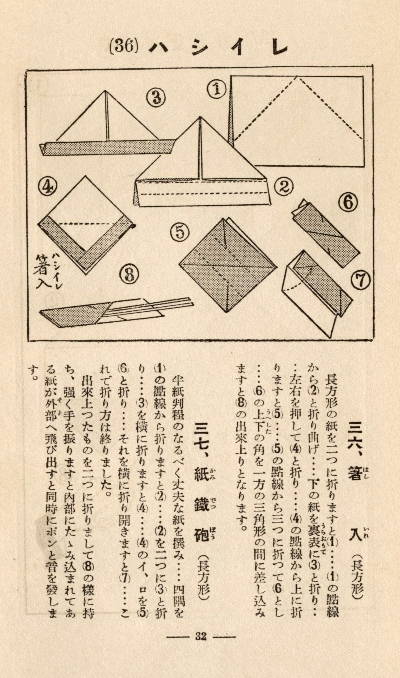
********** 36. Hashi-ire (Chopstick Holder) Developed from the Newspaper Hat.
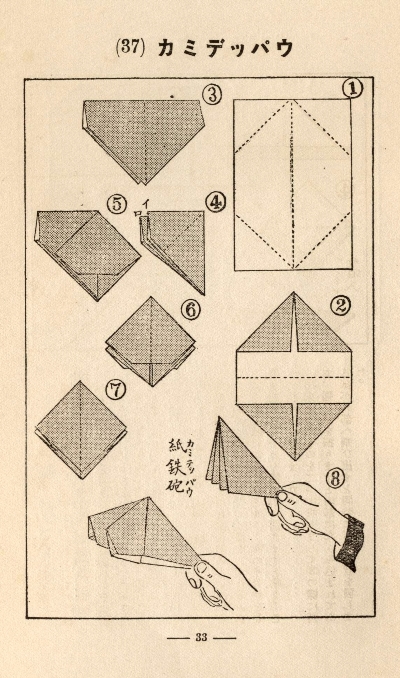
********** 37. Paper Gun - The Banger
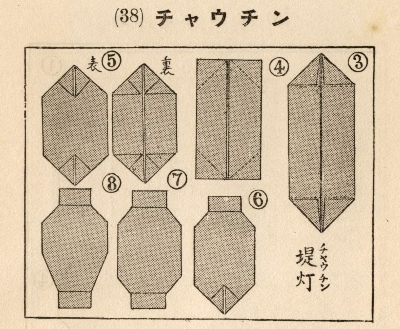
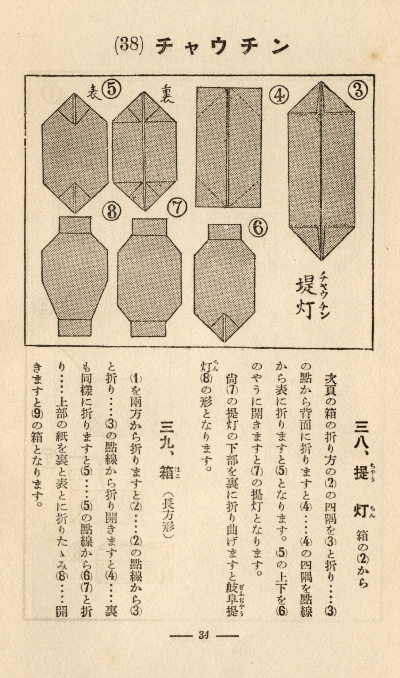
********** 38. Chochin (Lantern) - The Long Lantern
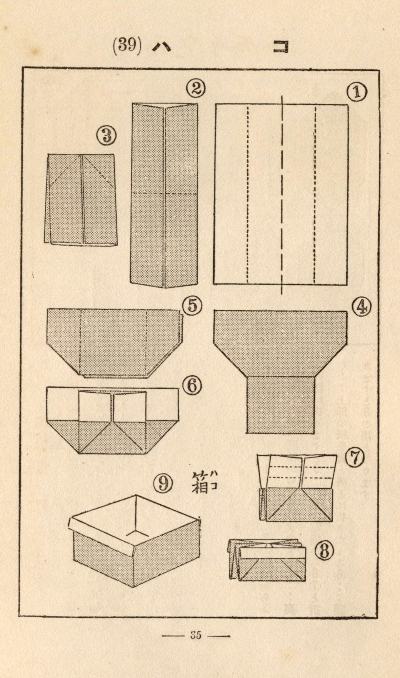
********** 39. Box - The Collapsible Box
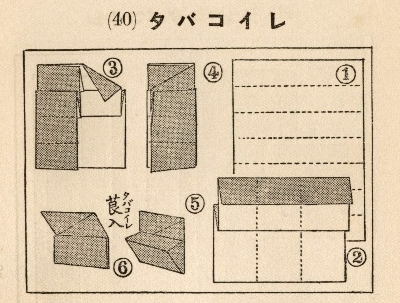
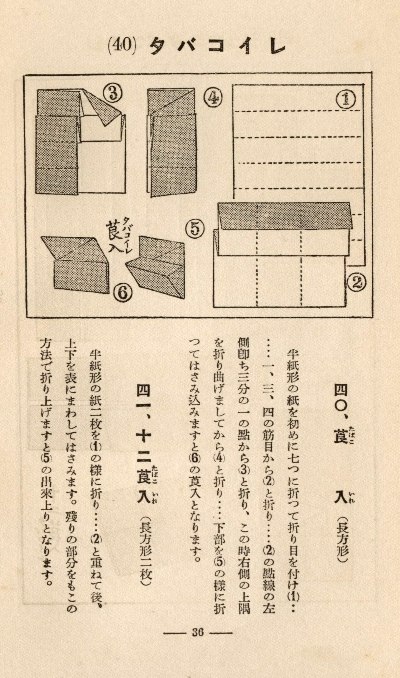
********** 40. Tobacco Pouch
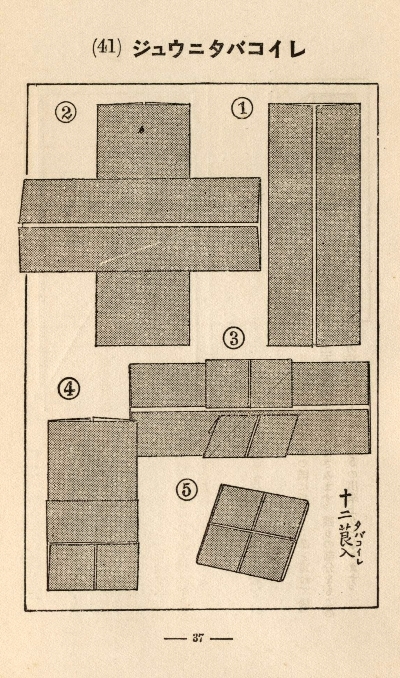
********** 41. Tobacco Box - The Business Card Holder
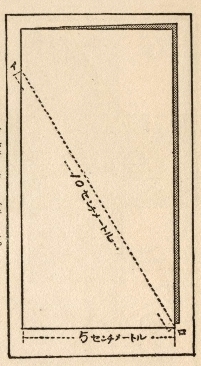
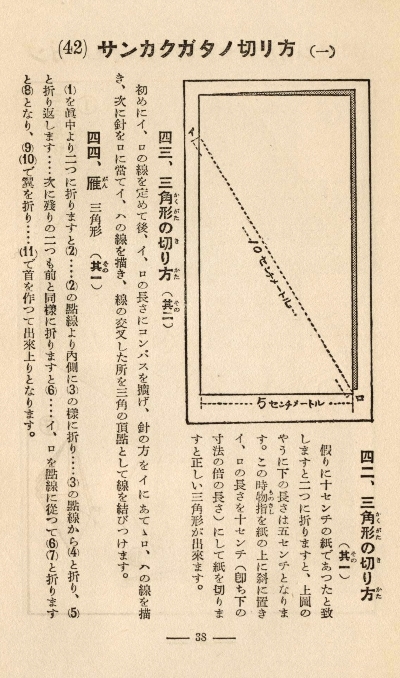
********** 42 and 43. How to make an Equilateral Triangle from a Square In 42 the triangle is made from a folded square by using a ruler to establish the length of the sloping cut. In 43 the position of the top point is established using a pair of compasses.
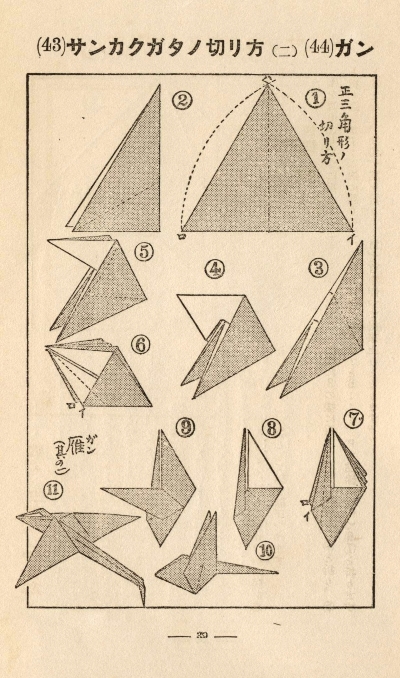
********** 44. Wild Goose (1) From an equilateral triangle
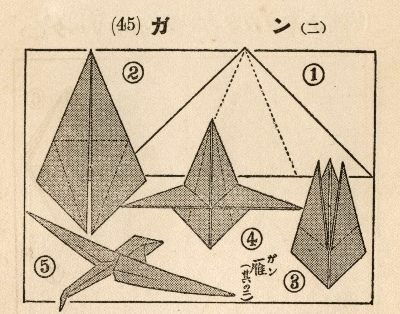
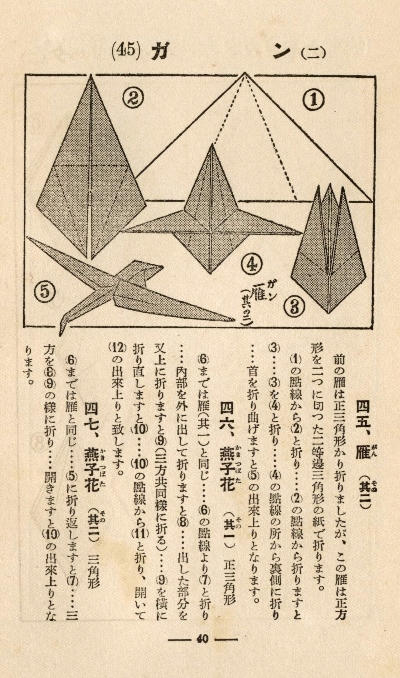
********** 45. Wild Goose (2) Folded from a right angle iscosceles triangle.
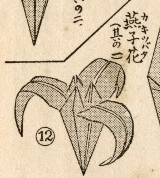
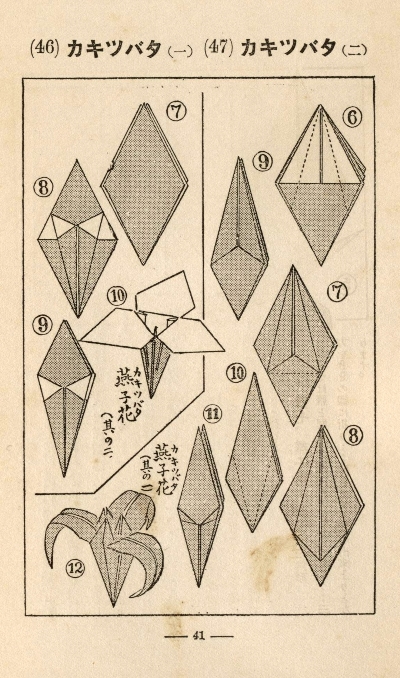
********** 46. Iris (1) - The Iris Folded from an equilateral triangle
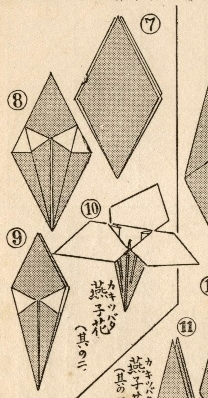
********** 47. Iris (2) - Folded from an equilateral triangle
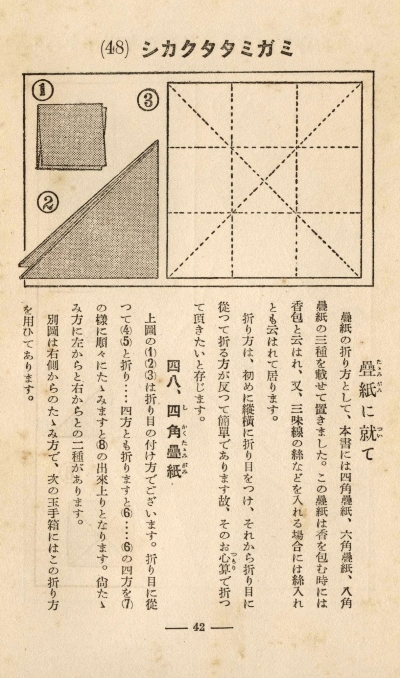
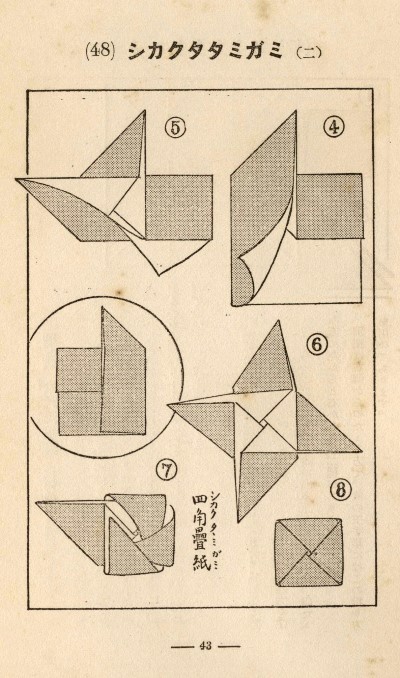
********** 48. Shikakutatami - The Thread Container
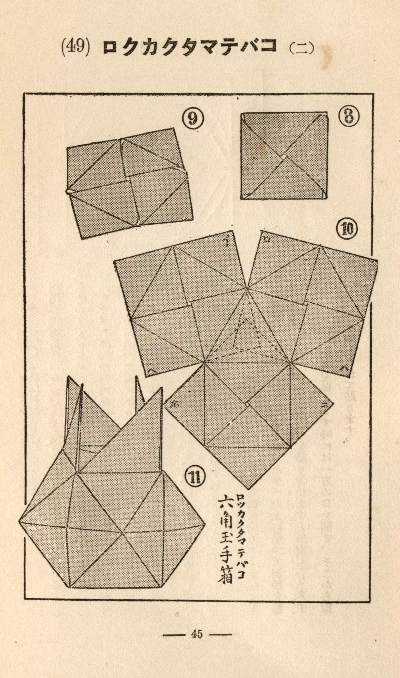
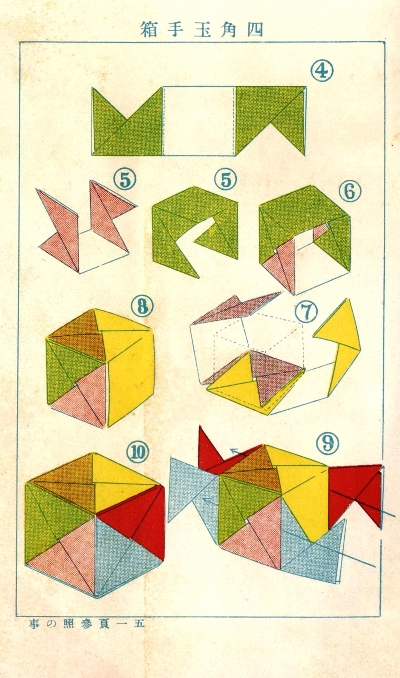
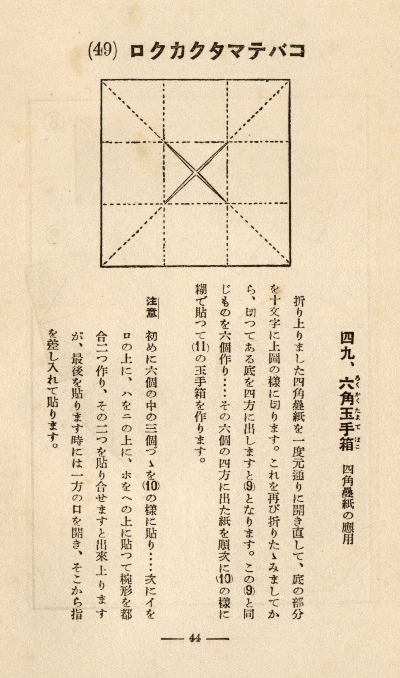
********** 49. Rokkaku Tamatebako - The Hexagonal Tamatebako
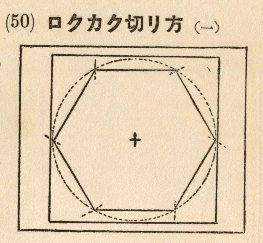
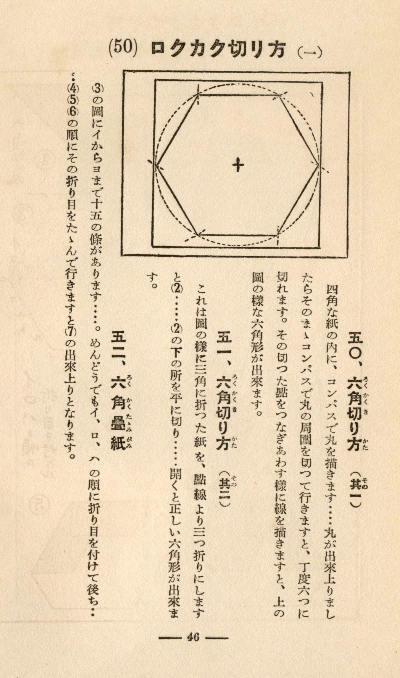
********** 50. Creating a hexagon using a pair of compasses
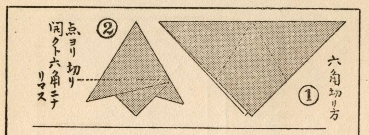
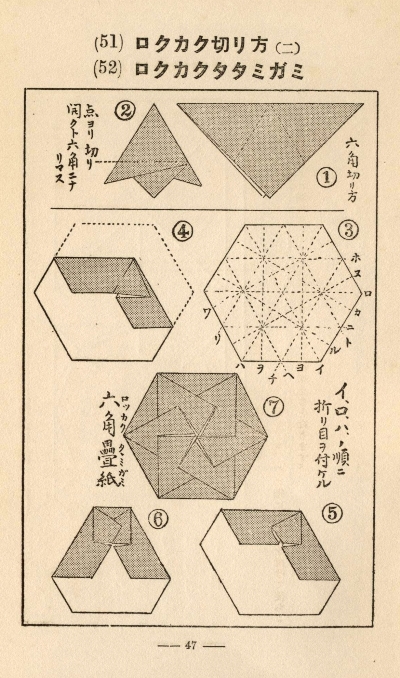
********** 51. How to Fold a Regular Hexagon from a square
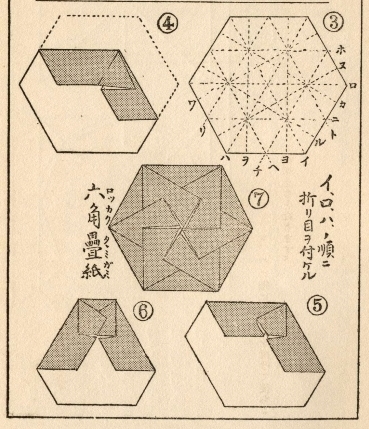
********** 52. Rokkakutatami -
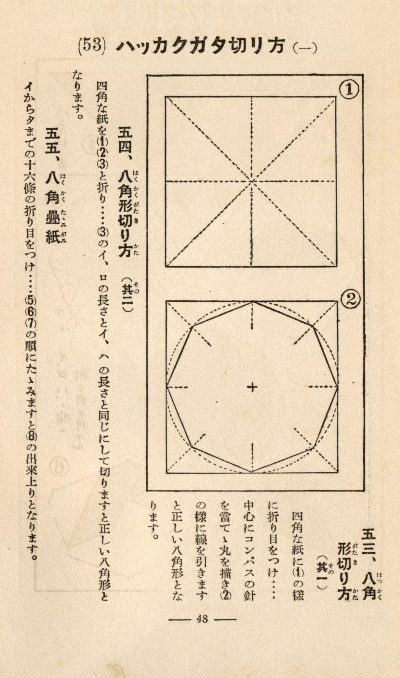
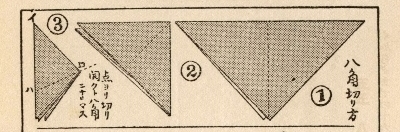
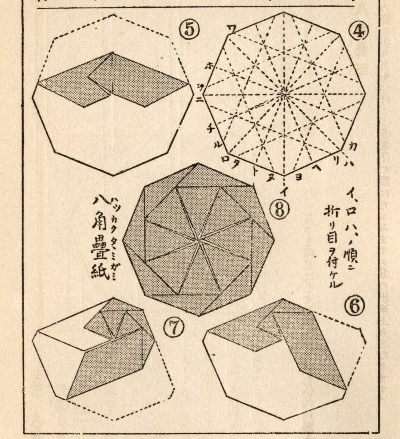
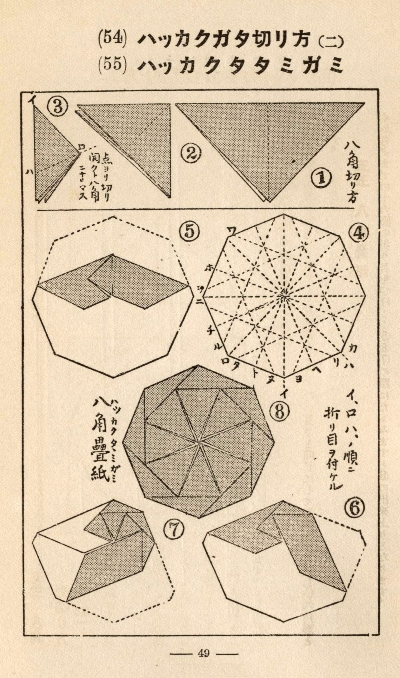
********** 53. Constructing an octagon using folding and a pair of compasses
********** 54. How to Construct an Octagon from a square
********** 55. Hachikakukeitatami -
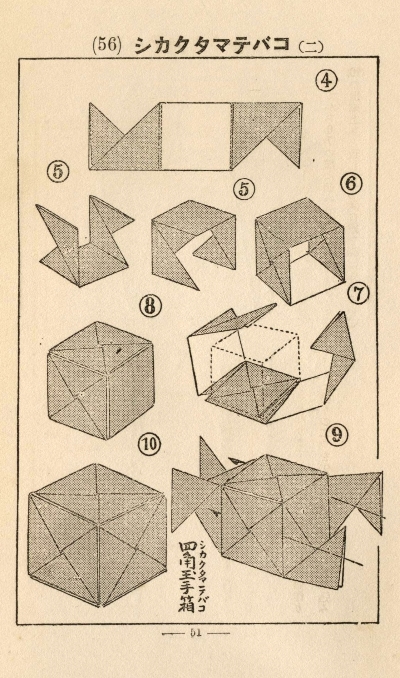
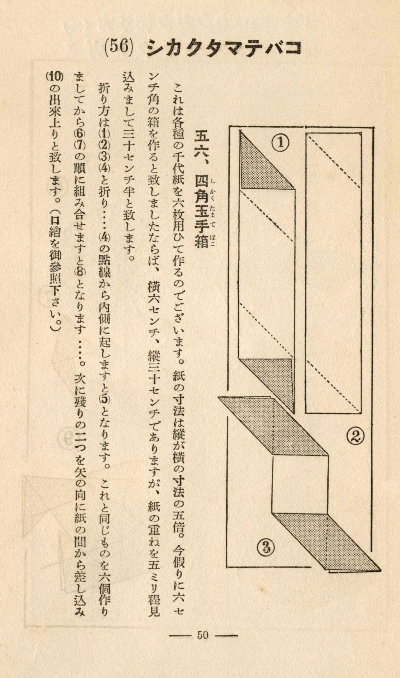
********** 56.Shikakutamatebako - The Mystery Box Made from six 5x1 strips of chiyogami.
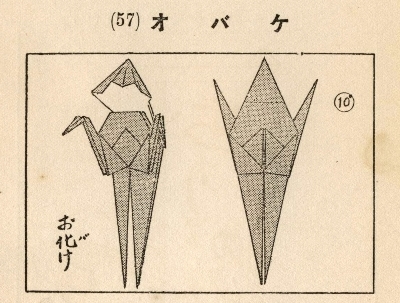
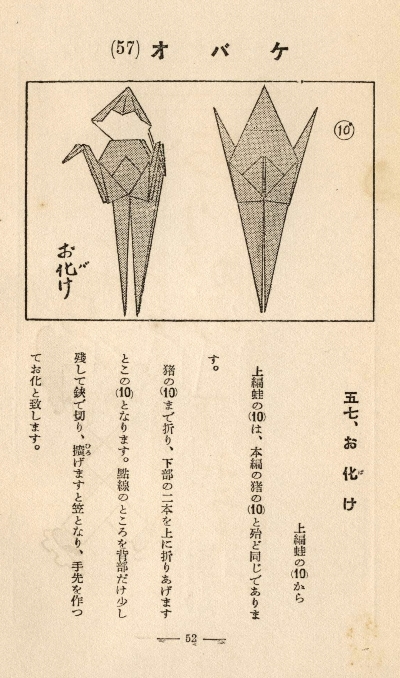
********** 57. Ghost - The Cut Phantom
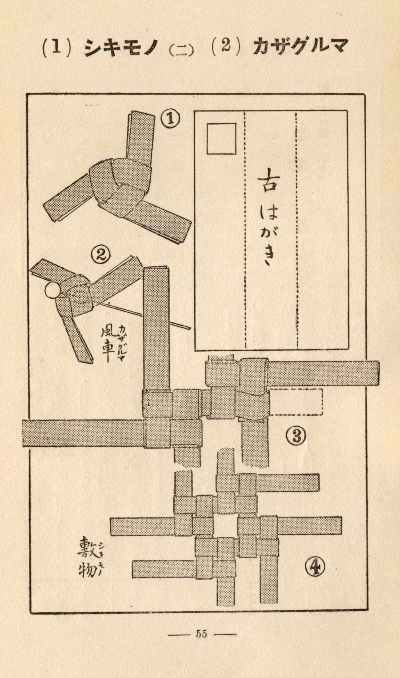
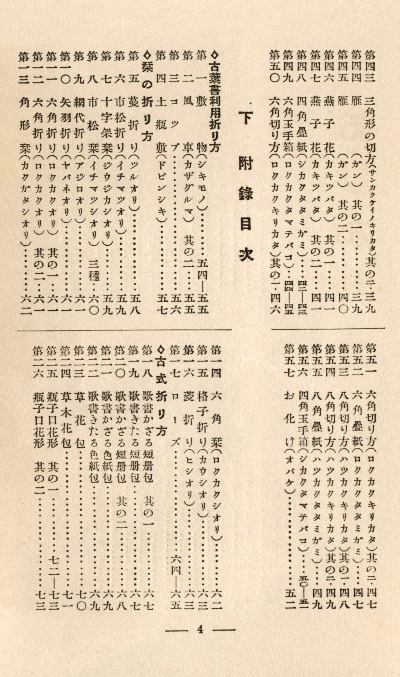
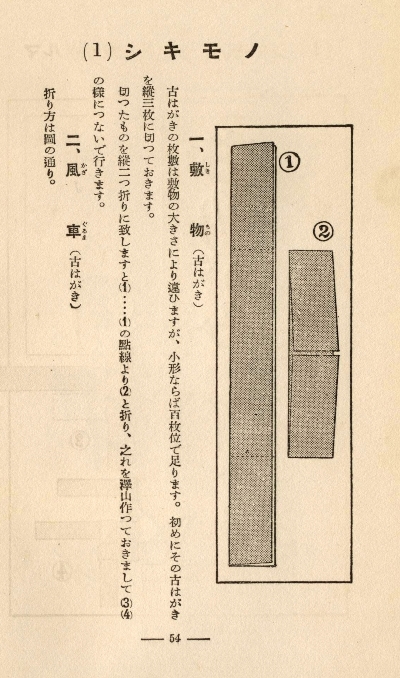
********** The Supplement 1. Shikimono (rug) - Woven Mat Made by weaving together multiple strips cut from postcards
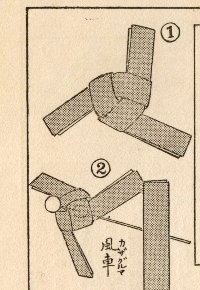
********** 2. Kazaguruma (windmill) - Woven Windmill Made by weaving together three strips cut from postcards
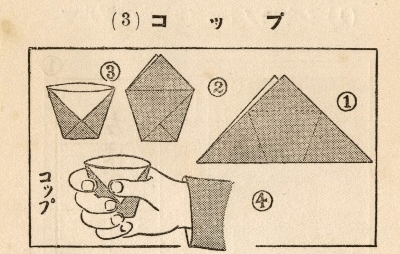
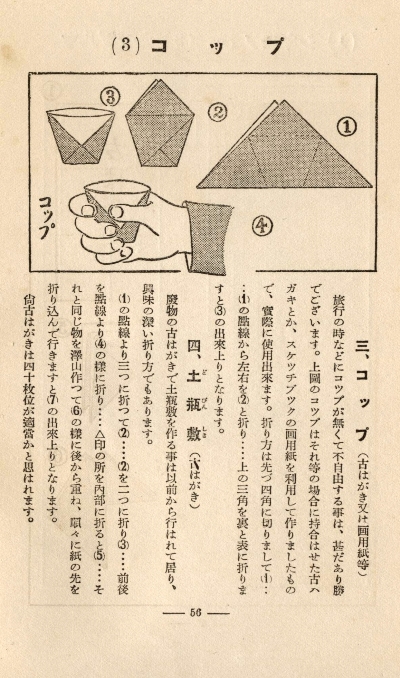
********** 3. The Paper Cup Folded from a postcard or drawing paper
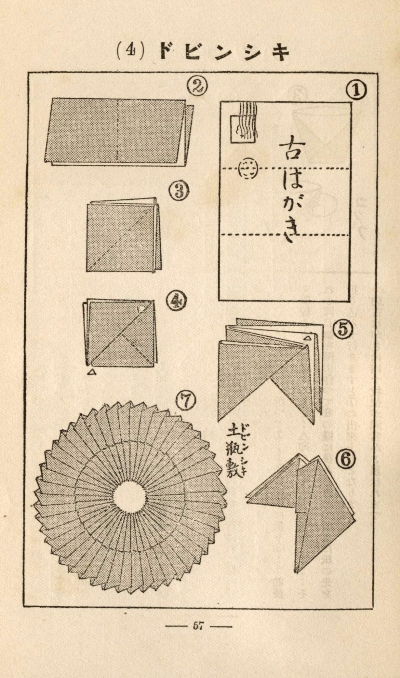
********** 4. Teapot Holder - The Teapot Stand From about 40 old postcards
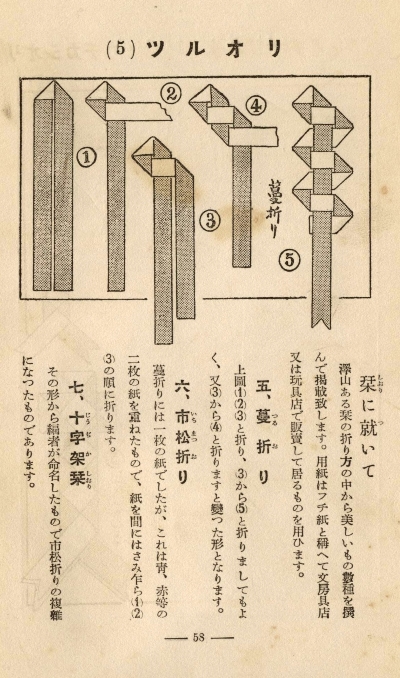
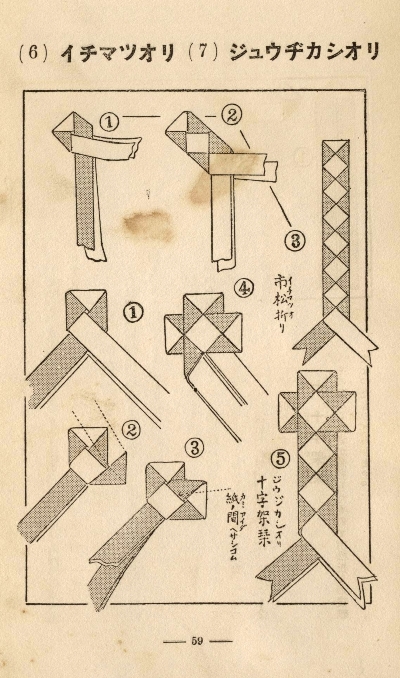
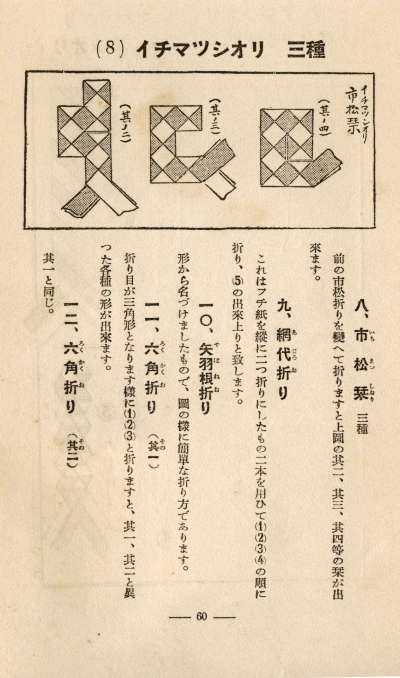
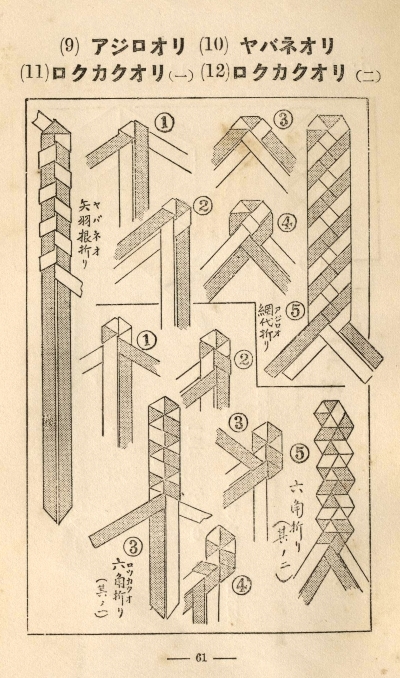
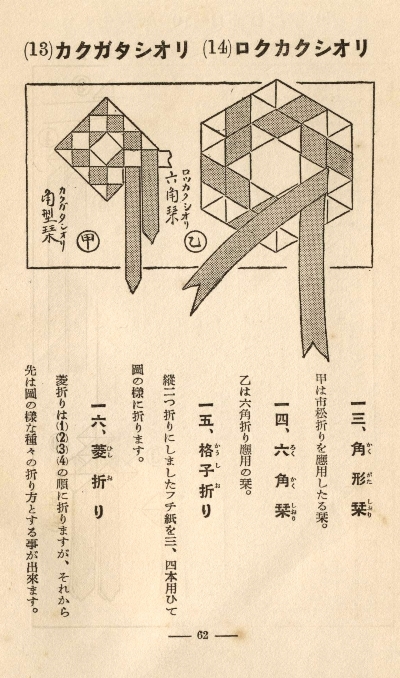
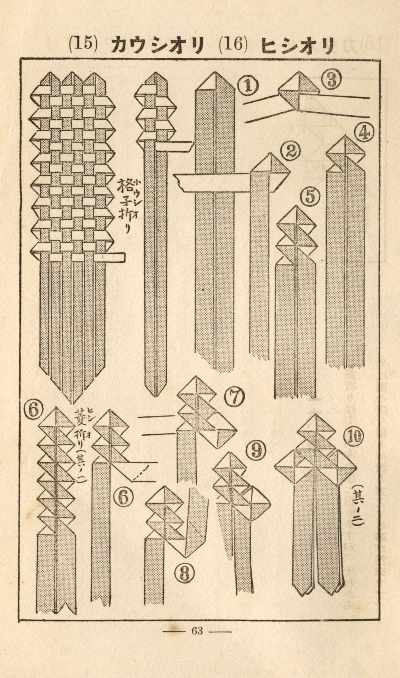
********** 5 to 16. Braiding with one or more paper strips
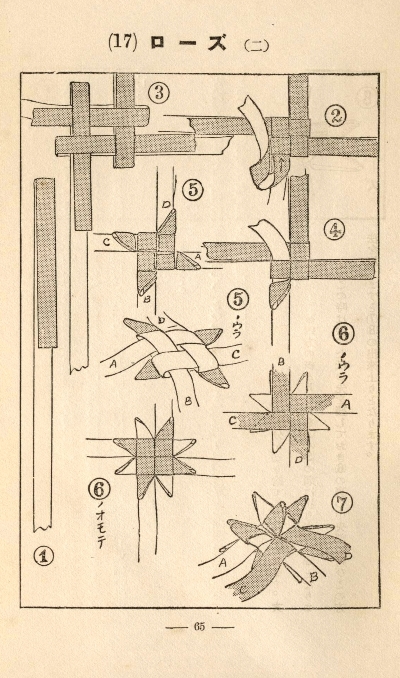
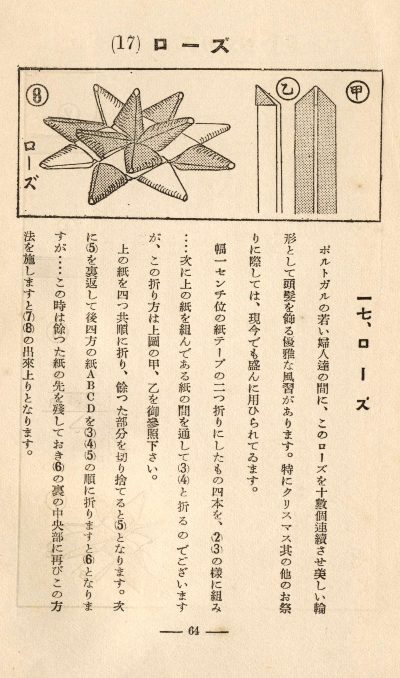
********** 6. Rose - The Paper Rosette Inter alia the text says, very roughly translated: 'Among young Portuguese ladies there is an elegant custom of decorating the hair with a circle of about a dozen of these roses, especially at Christmas and other festivals.'
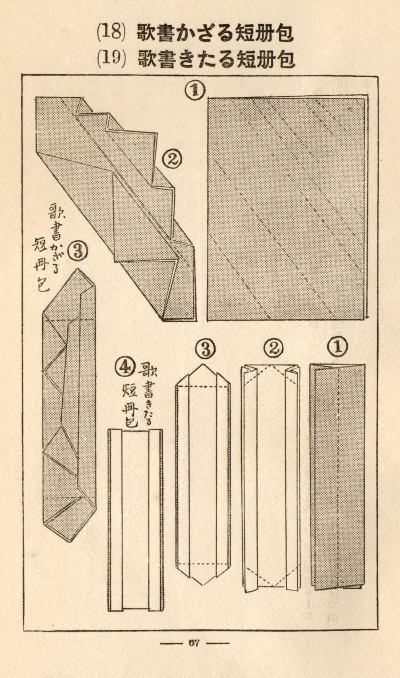
********** At this point in the book there is a heading 'About Traditional Folding Methods' and some introductory text which, roughly translated, reads: 'Traditional folding methods include various gift wrappers, engagement gift wrappers, female and male wrappers for bottles, arrow wrappers, bow wrappers, incense wrappers, and dozens of other types, and since this is an extremely diverse field with descriptions of the differences between the various schools, such as the Ogasawara family, the Ise family and the Okusa family, we will leave the research and publication of these to another day, and instead we have selected two or three of these that are of interest and practical use in this book.' 18 and 19. Two wrappers for poems The second design is intended as a frame for the poem.
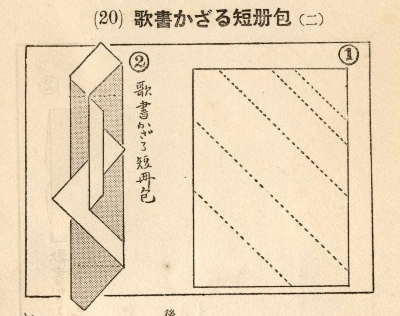
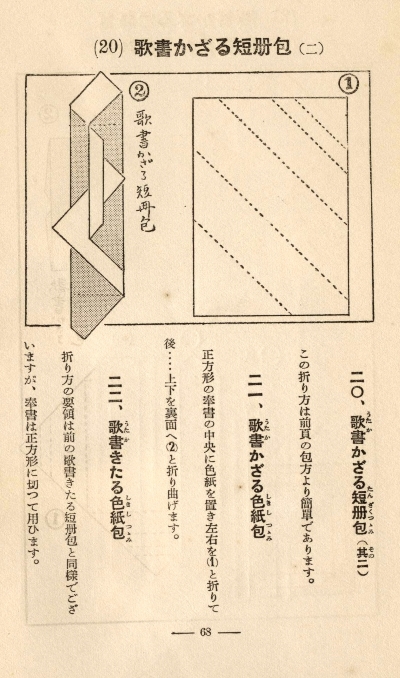
********** 20. A wrapper for a poem
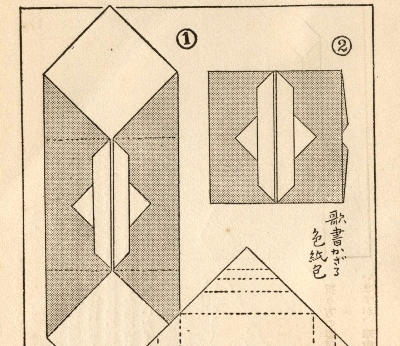
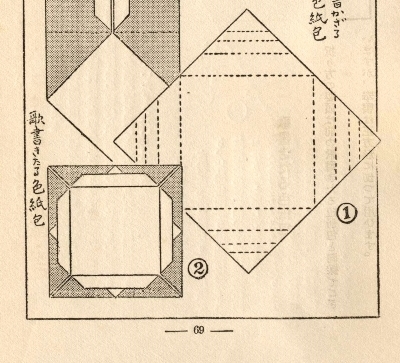
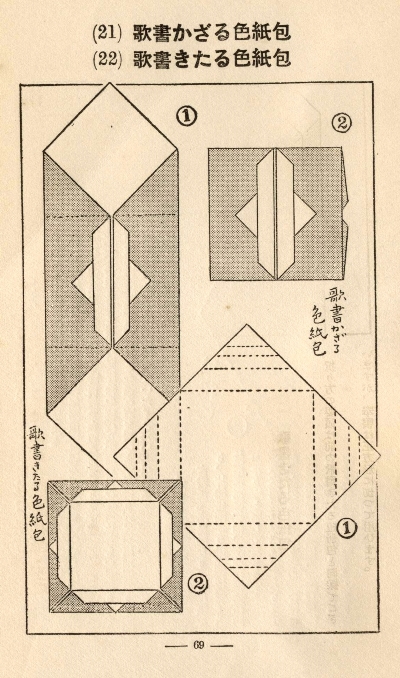
********** 21. Decorative Square Package
********** 22. Frame for a poem
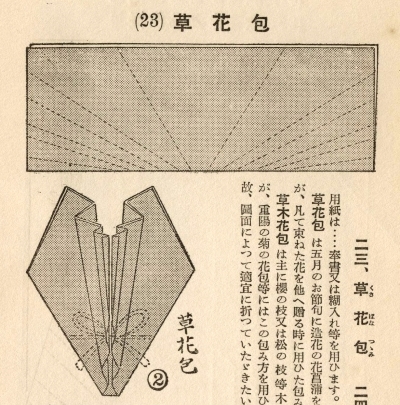
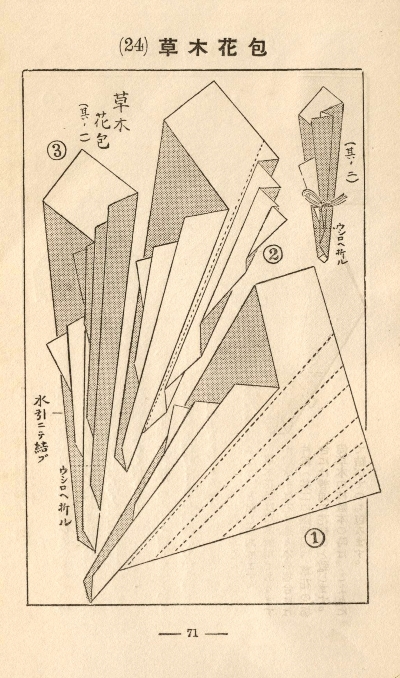
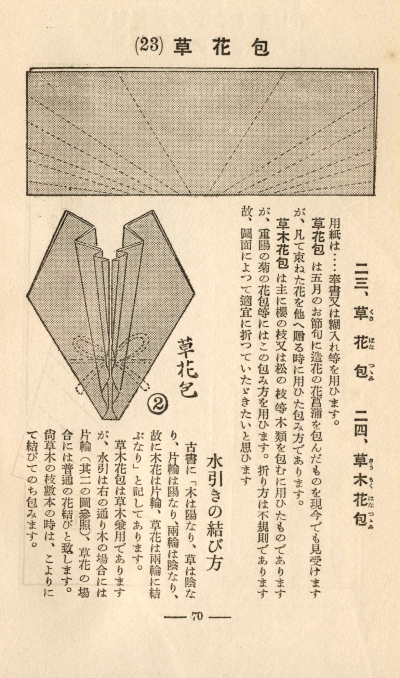
********** 23. Kusahana Bukuro (flower bag) A wrapper for flowers.
********** 24. Kusakika Bukuro (vegetation bag) A wrapper for greenery.
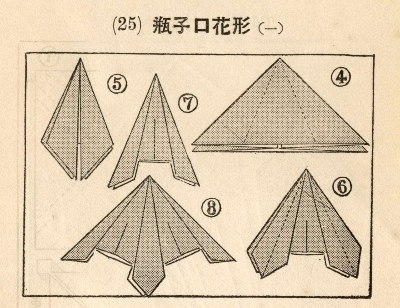
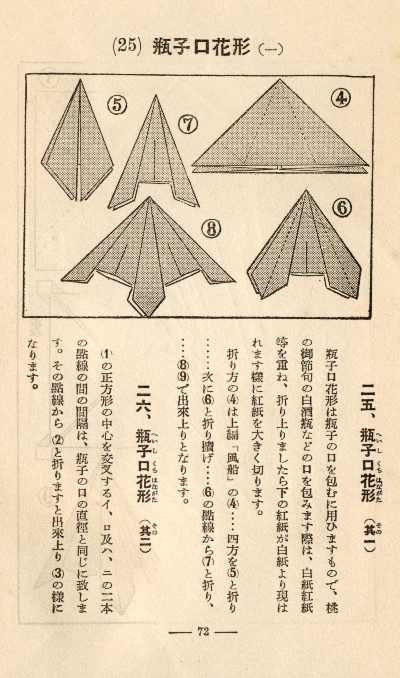
********** 25. Flower-shaped bottle cover (1)
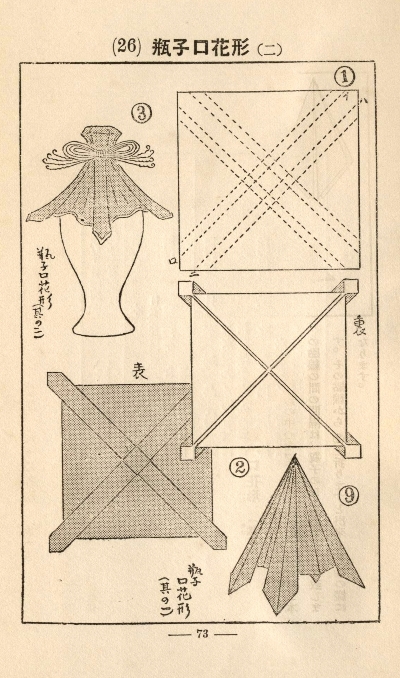
********** 26. Flower-shaped bottle cover (2)
********** The Work
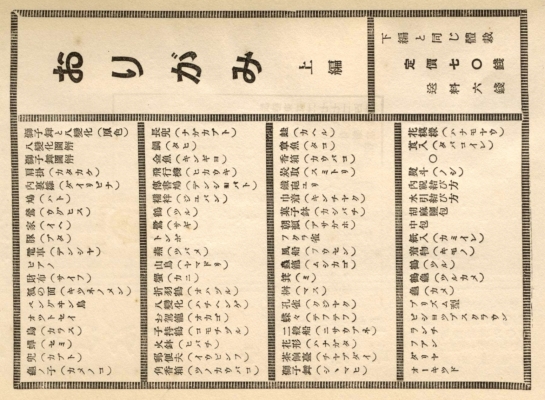
********** This page is an advett for Origami Part One (upper)
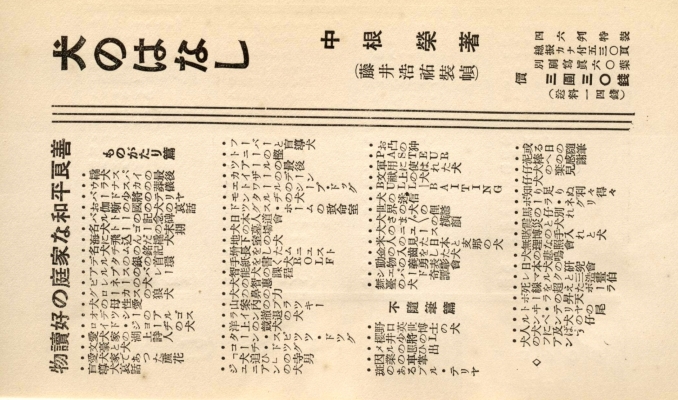
********** This page is an advert for a separate work by another author
********** |
|||||||