| The Public Paperfolding History Project
Last updated 23/12/2026 x |
|||||||
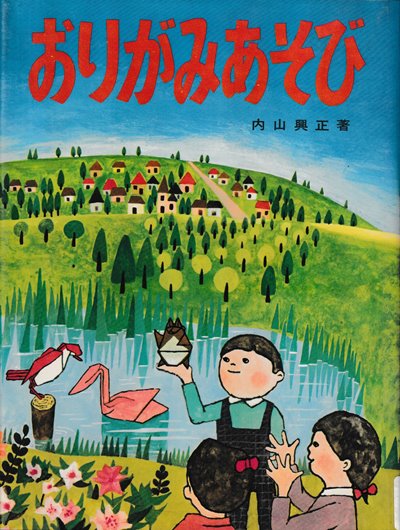
| Origami Asobi by Okimasa Uchiyama, 1967 | |||||||
| 'Origami
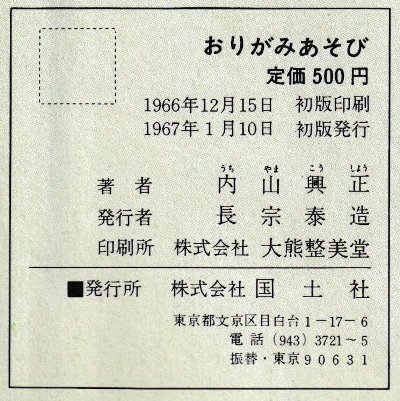
Asobi' (Origami Play) by Okimasa Uchiyama was published
by Kokudo Sha in Tokyo in 1967. The work contains
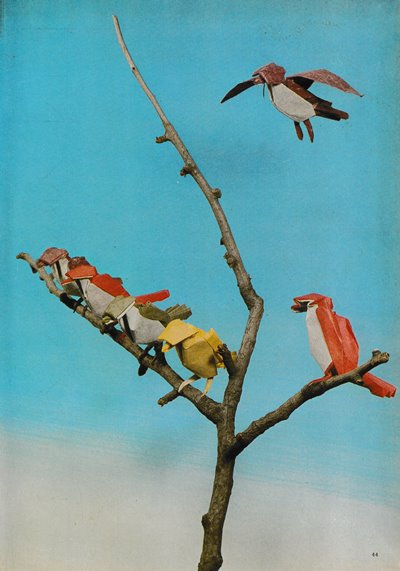
original paperfolding designs by the author, a number of
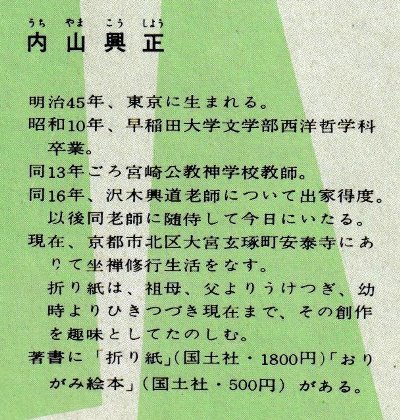
which are of Western rather than Japanese subjects My grateful thanks to the British Origami Society for allowing me to access a copy of this work. The work includes a brief biographical note, which, roughly translated, reads: 'Born in Tokyo in 1912. Graduated from the Department of Western Philosophy, Faculty of Letters, Waseda University, 1935. Around the same time he became a teacher at Miyazaki Kokyo Seminary. In the same year he became a monk and was ordained by Master Swaki Kodo, who he has attended ever since. Lives in Antaji Temple, Omiya Gentokucho, Kita-ku, Kyoto, where he practises Zen meditation. Since I was a child I have been enjoying creating origami as a hobby, inheriting it from my grandmother and father.'
**********
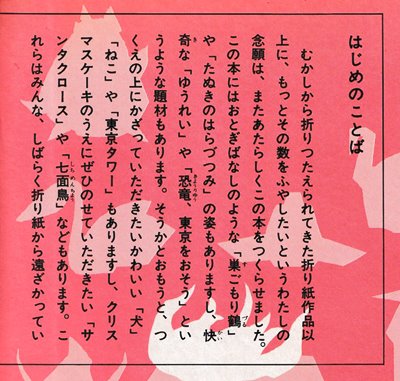
********** Inter alia this introductory text says roughly translated: 'My desire to increase the number of origami designs beyond those passed down since ancient times led me to create this book ... All of the designs in this book were made from a single square piece of paper, without using glue or scissors.'
********** Inter alia, this Afterword says, roughly translated:' ... my style of origami design ... begins with the study of basic shapes (ie crease patterns) ... When I get an idea, I try to fold it as simply as possible. I try not to get carried away with complicated techniques, Because it is made from paper, the physical work itself rarely survives. In this respect it differs from paintings or sculptures. The design, is passed down through being folded, in a similar way to how a song written by a composer is passed down through the generations. Therefore, the quality of an origami design cannot be determined solely by the quality of the finished form, but also by whether the folding method is refined or not. Therefore I believe that every piece should be unfolded to see how neatly the folds are set. In order for folding to be passed down, I believe that roundabout techniques that are left to the folder's dexterity are not permitted and that only necessary and sufficient folds should be pursued. Whether my style is correct or not will become clear in the long run.' This latter part sounds to me like a criticism of Yoshizawa's soft crease style, somewhat similar to that expressed by Isao Honda.
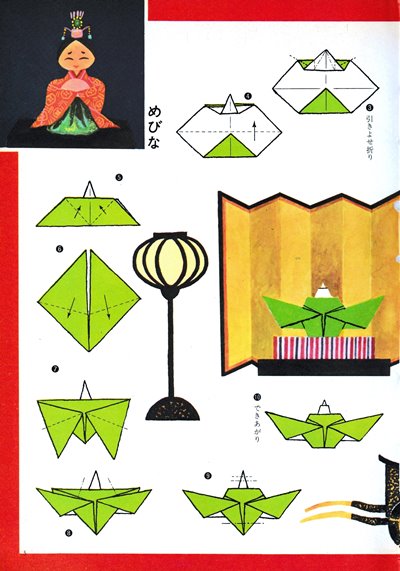
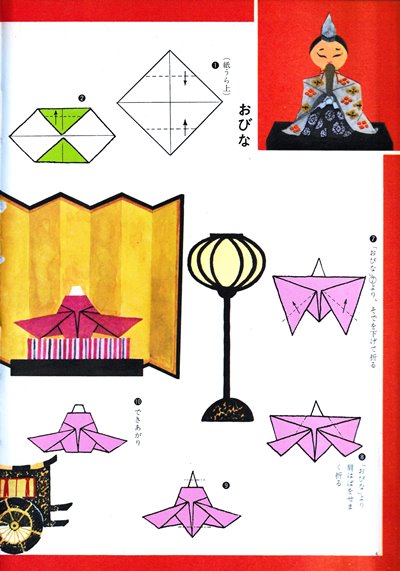
********** Analysis Mebina and Obina - Emperor and Empress Dolls
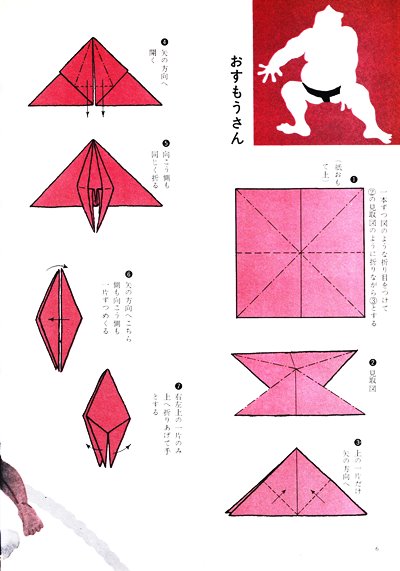
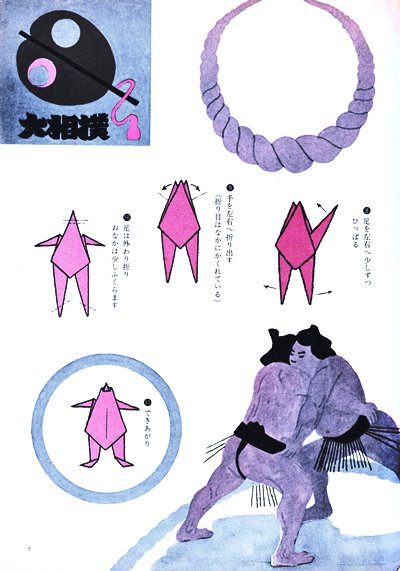
********** Osumou-san (Sumo Wrestler)
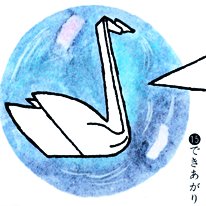
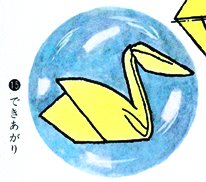
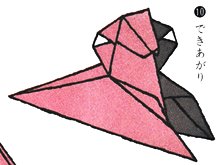
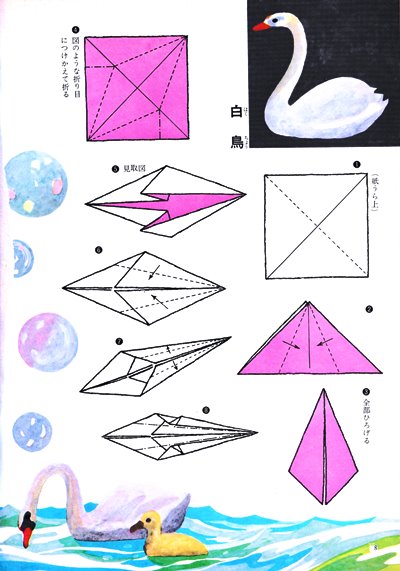
********** Swan
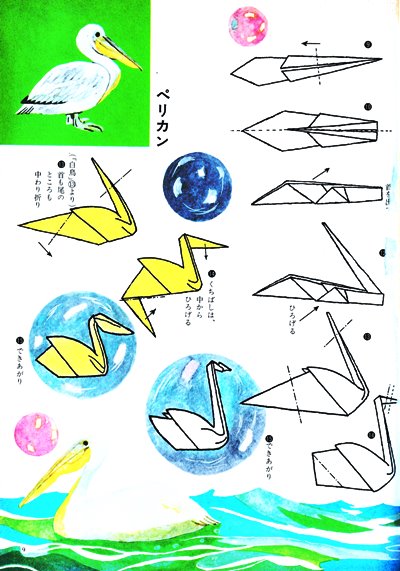
********** Pelican
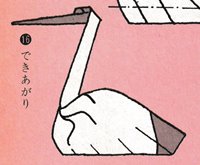
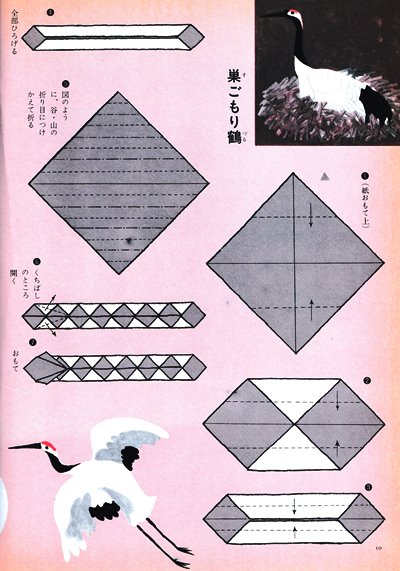
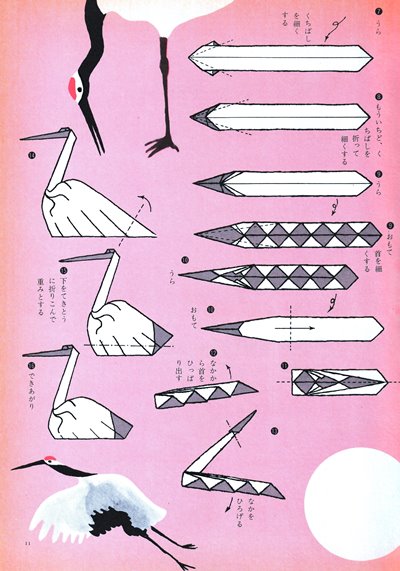
********** Nesting Crane
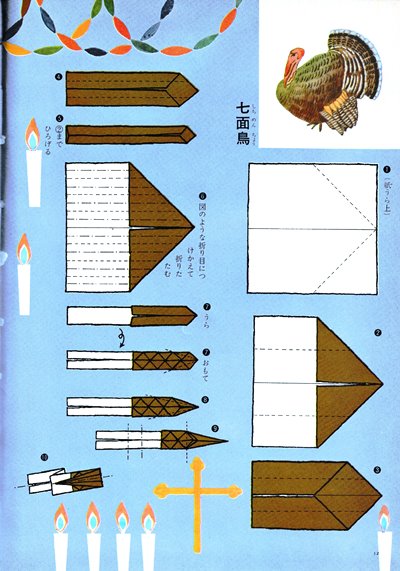
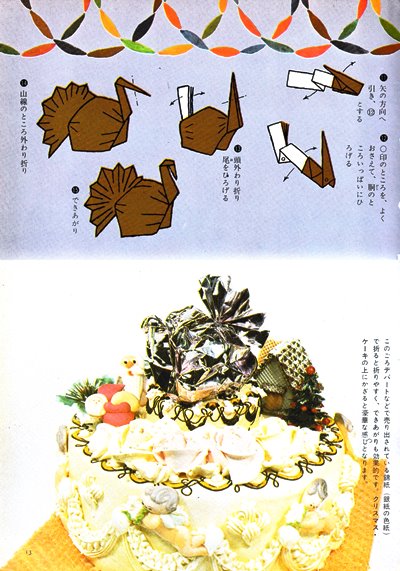
********** Turkey
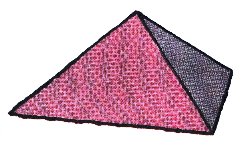
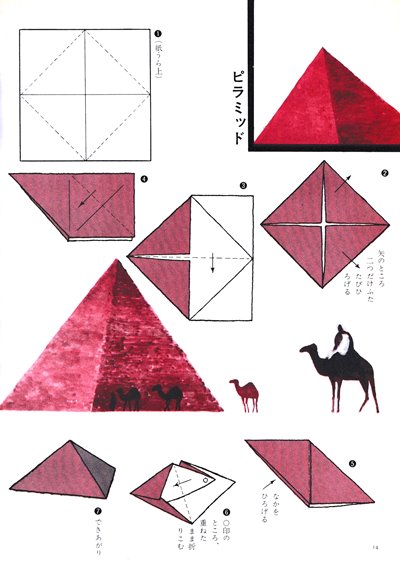
********** Pyramid
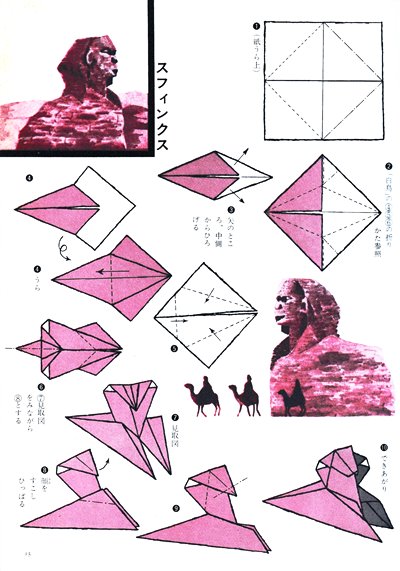
********** Sphinx
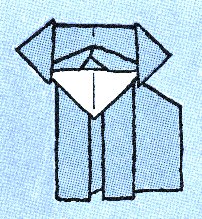
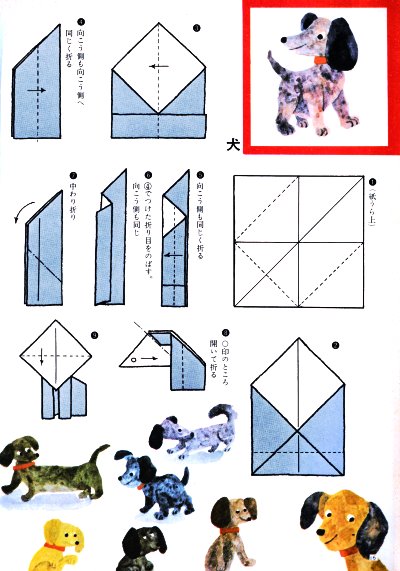
********** Dog
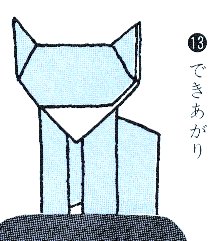
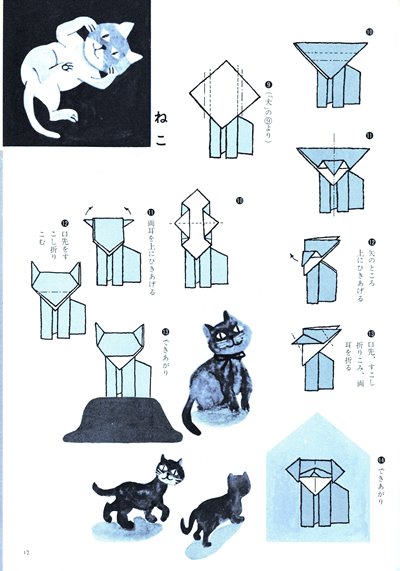
********** Cat
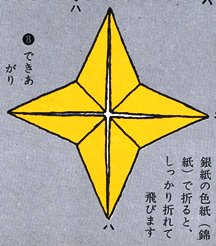
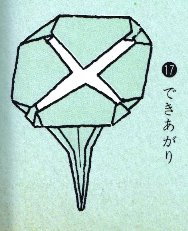
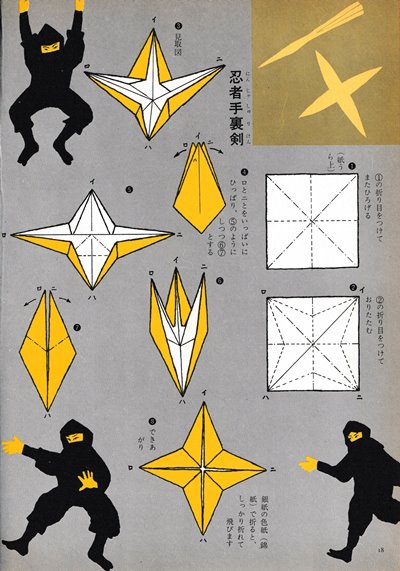
********** Ninja Shuriken Four-pointed star from a stretched bird base.
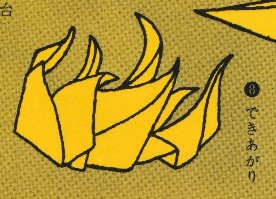
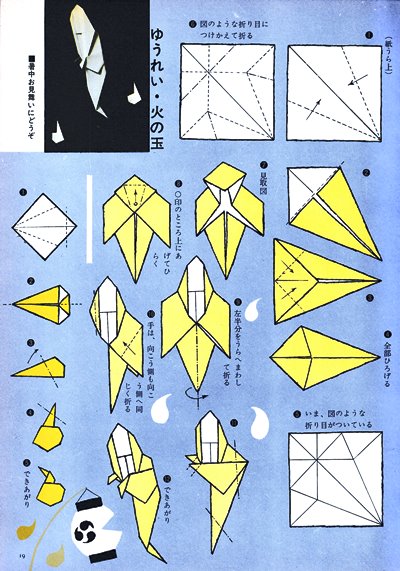
********** Fireball Ghost
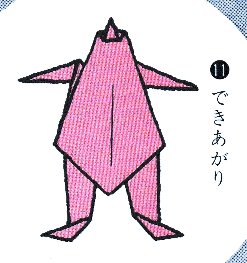
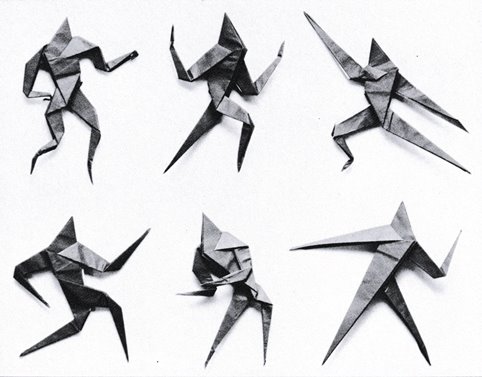
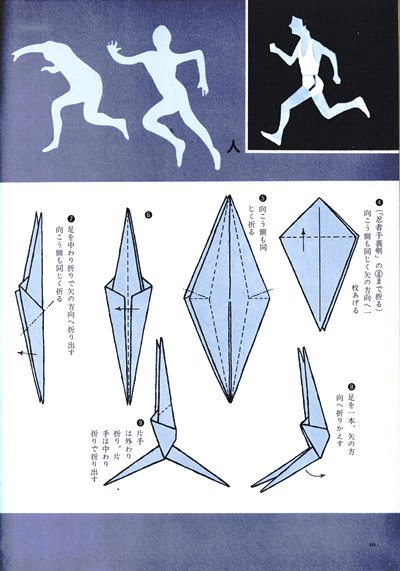
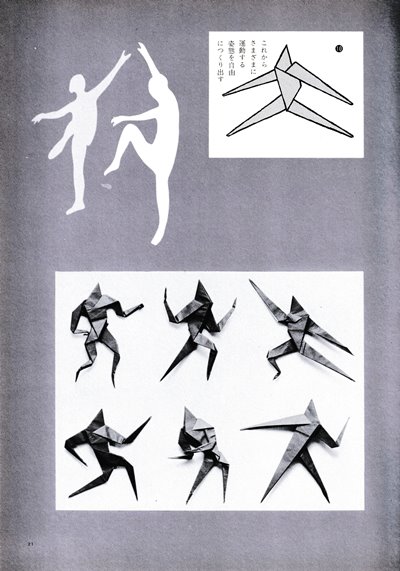
********** People
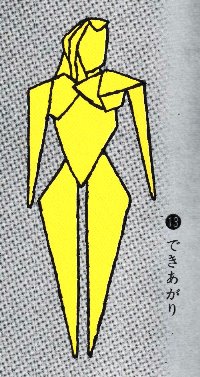
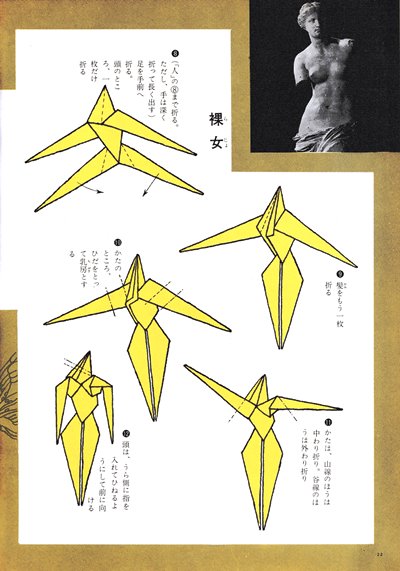
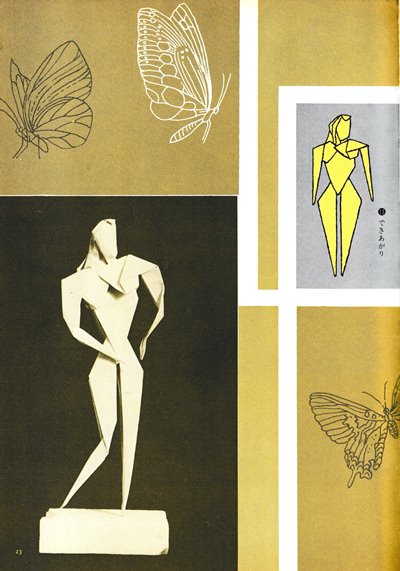
********** Female Nude
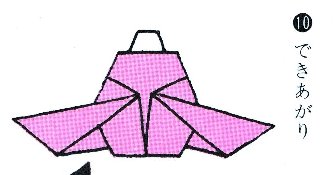
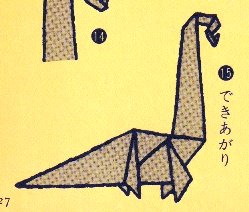
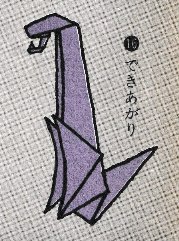
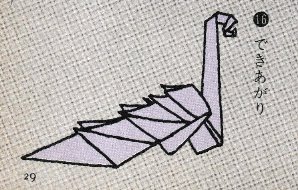
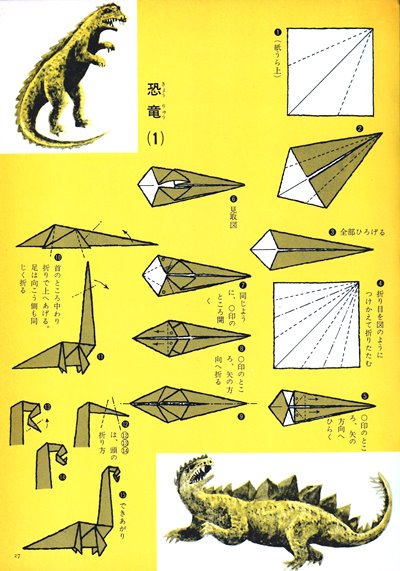
********** Dinosaur 1
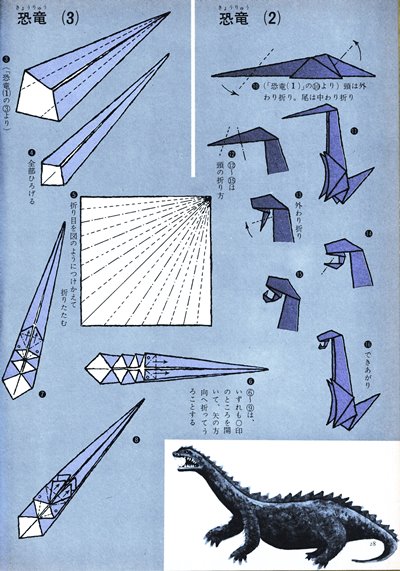
********** Dinosaur 2
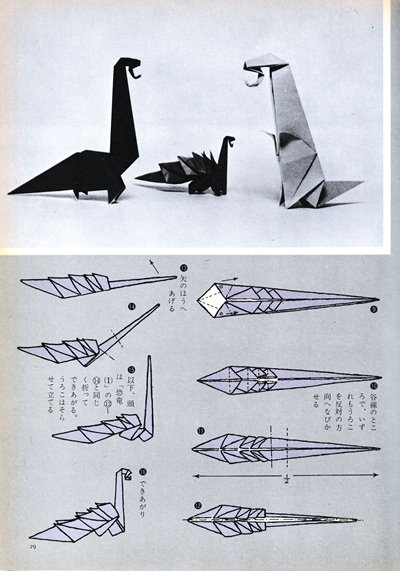
********** Dinosaur 3
********** Cauldron Triangular - Developed from the Hibachi
********** Olympic Flame
********** Santa Claus
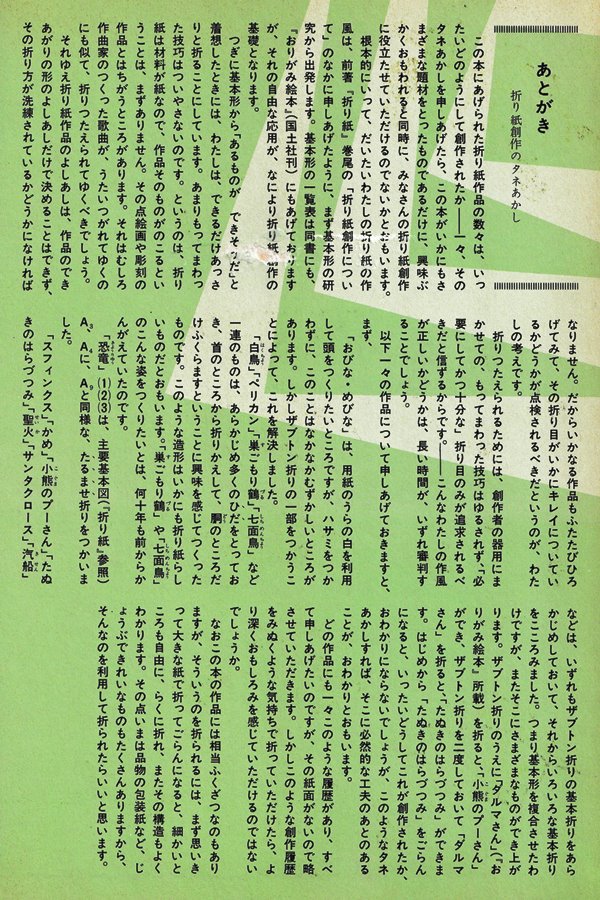
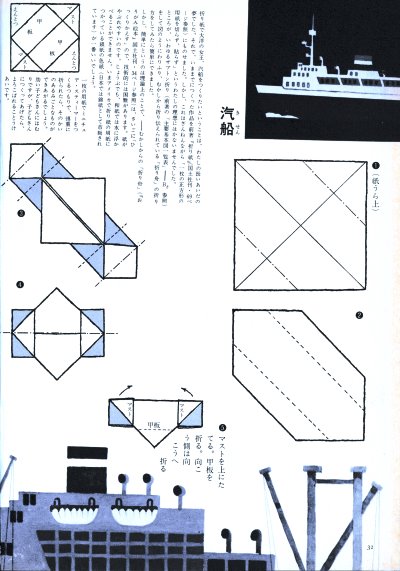
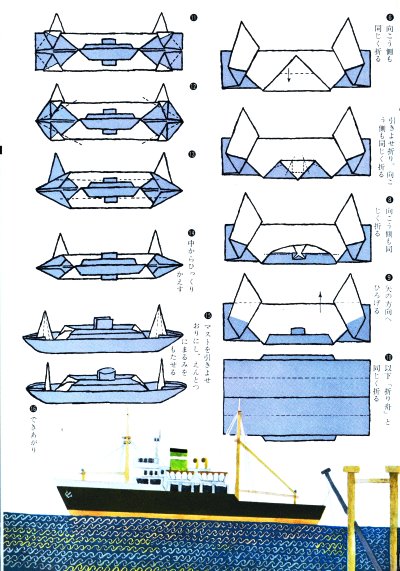
********** Steamer
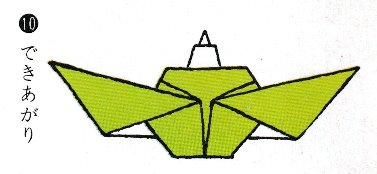
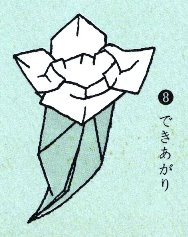
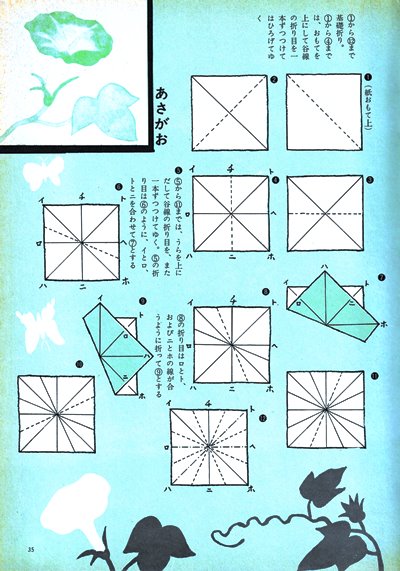
********** Morning Glory
********** Gentian
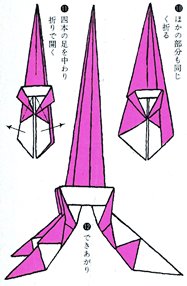
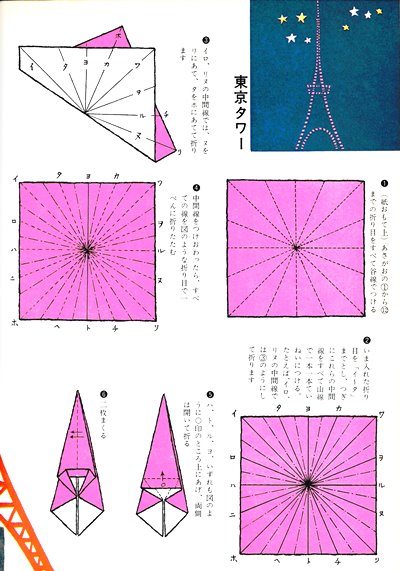
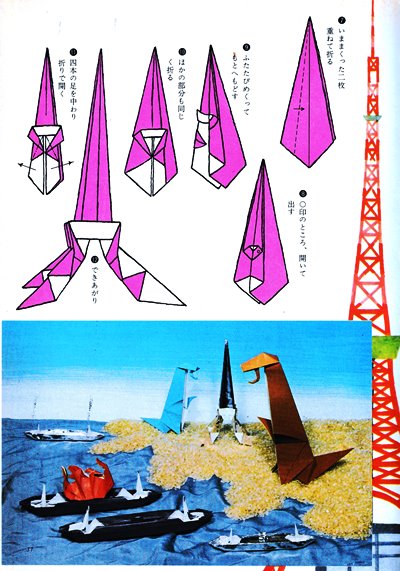
********** Tokyo Tower
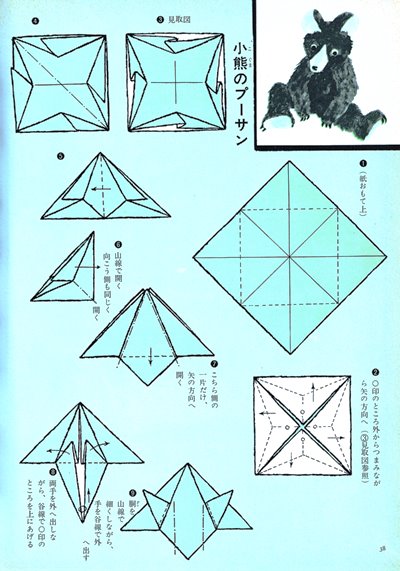
********** Pusan the bear
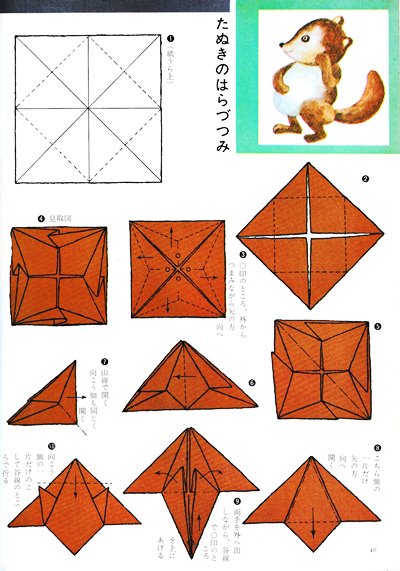
********** Tanuki's Harvest
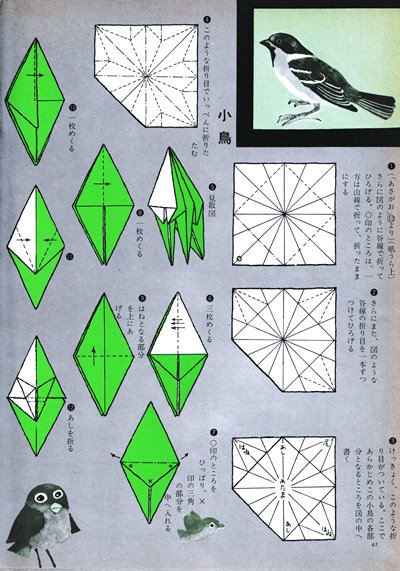
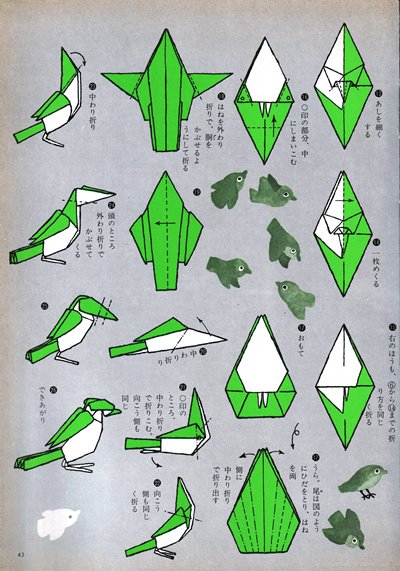
********** Birdie
********** Turtle
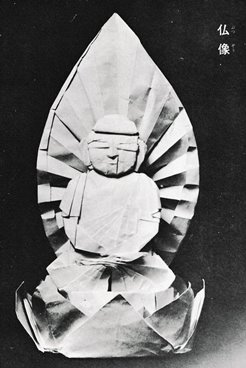
********** The work also contains photographs of three designs for which no folding instructions are supplied: Buddha
********** Crucifixion
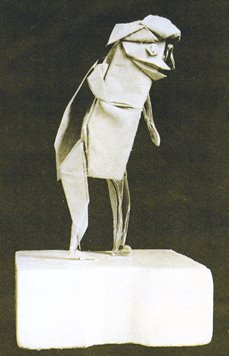
*********** Kappa (water demon)
********** Selected Pages
********** |
|||||||