| The Public Paperfolding History Project
Created 25/9/2021. Last updated 20/12/2025 x |
|||||||
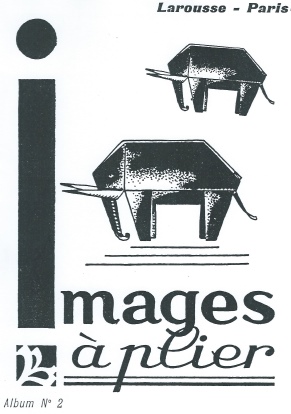
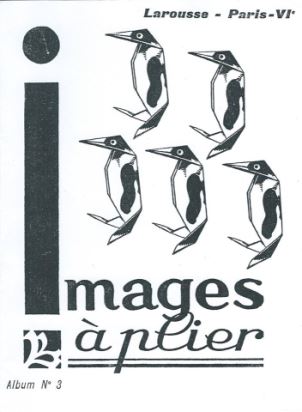
| Images a Plier by M R Chasles, 1931 | |||||||
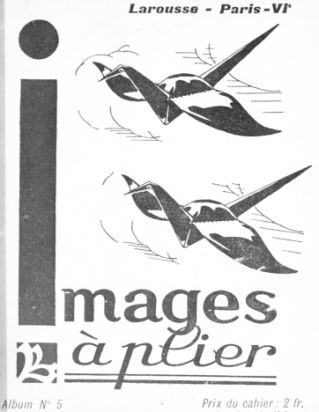
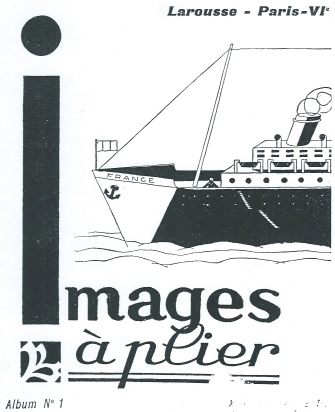
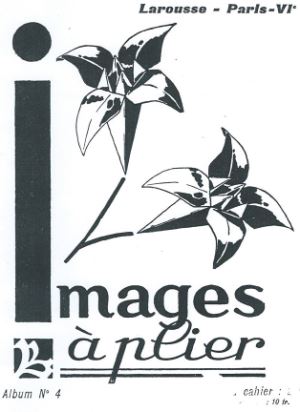
| 'Images
a Plier' is not a single book but a series of 6 booklets
published by Librairie Larousse in Paris in 1931
(although the page numbers run consecutively throughout
all six). The introduction by M George Moreau gives the
name of the author of the work as M R Chasles (not one
person but two, ie Madeleine and Raymond
Chasles).
They were, perhaps, also the creators of some of the
designs the booklets feature. Many of the designs / diagrams had previously appeared in the children's magazine 'L'Age Heureux' during 1929 and 1930 (and possibly elsewhere at a similar date). See notes against individual designs. My thanks to Michel Grand for this information. My thanks to Juan Gimeno for providing scans of the pages from these booklets. The following note appears in all the booklets:
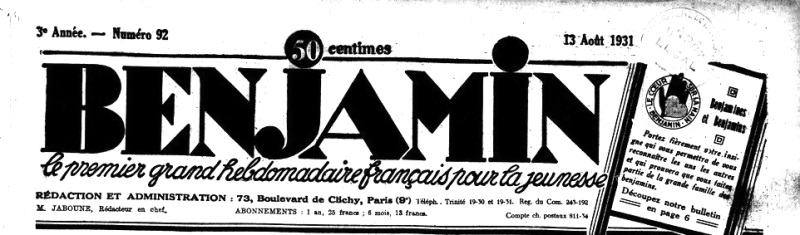
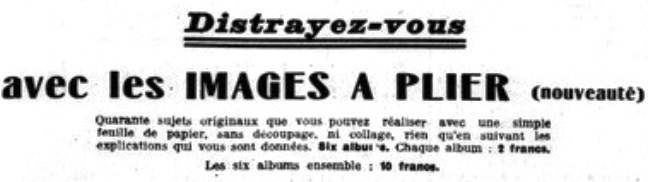
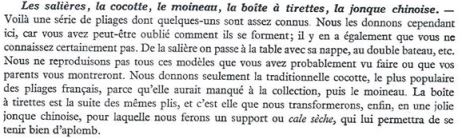
The last sentence states that the objects are made simply by folding a sheet of paper, without cutting and without using glue. This is, however, not true in many cases. See notes against individual designs. The publication date of 1931 can be substantiated from an advert that appeared in the magazine 'Benjamin' of 13th August 1931. Because they are described as 'nouvaute' they are presumably newly published, possibly in July 1931. Information from Michel Grand. Note that there is a discount for purchasing all six booklets.
********** Booklet 1
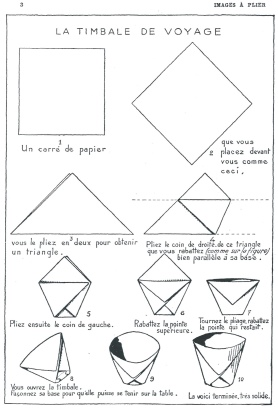
********** La Timbale de Voyage - The Paper Cup These diagrams previously appeared in 'L'Age Heureux' of 18th July 1929
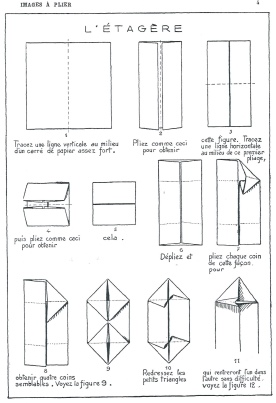
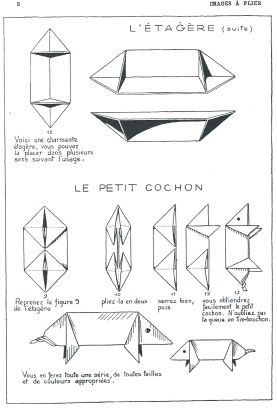
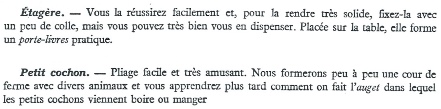
********** L'Etagere - The Shelf) / Le Petit Cochon - The Pig These diagrams previously appeared in 'L'Age Heureux' of 18th July 1929
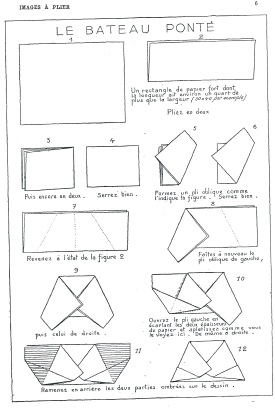
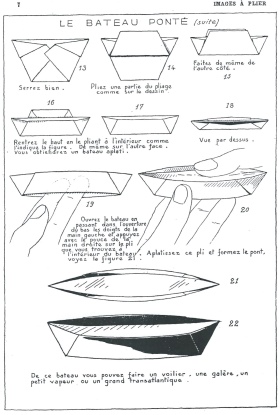
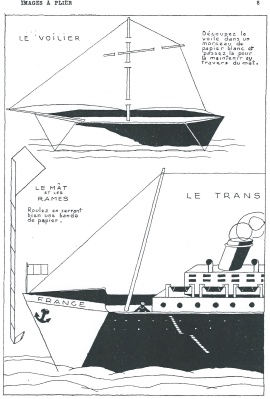
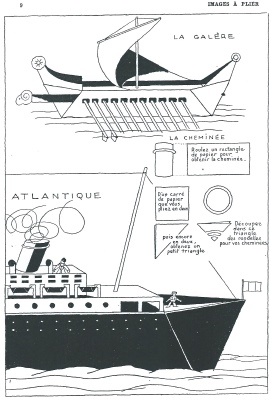
********** Le Bateau Ponte - La Peniche These diagrams previously appeared in 'L'Age Heureux' of 5th September 1929
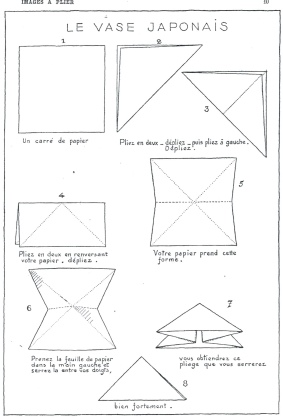
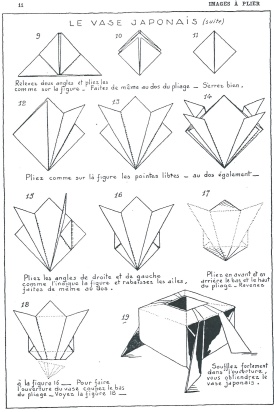
********** Le Vase Japonais - A version of the Mushikago These diagrams previously appeared in 'L'Age Heureux' of 17th October 1929
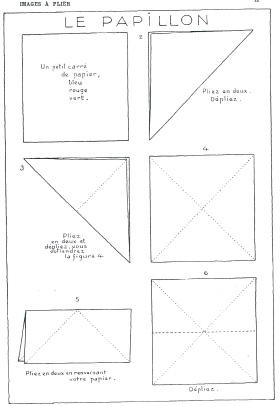
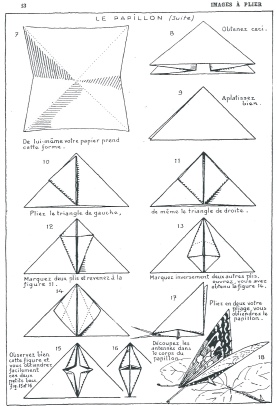
********** Le Papillon - The Flapping Butterfly (The author of this book does not seem to have been aware of the flapping action) These diagrams previously appeared in 'L'Age Heureux' of 4th September 1930
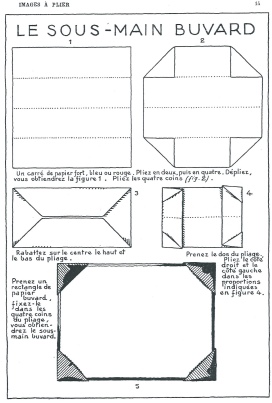
********** Le Sous-Main Buvard (The Desk Pad) - The Blotting Paper Holder
********** Booklet 2
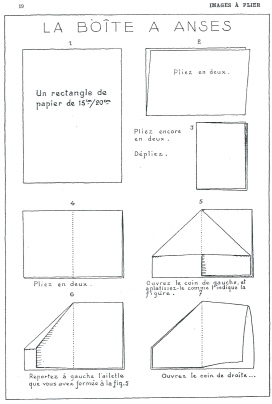
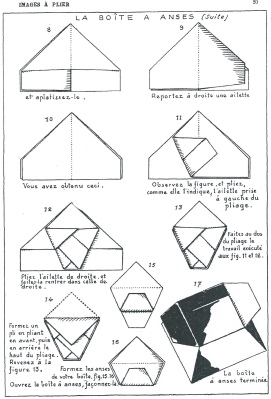
********** La Boite a Anses - The Box with Handles These diagrams previously appeared in 'L'Age Heureux' of 6th February 1930
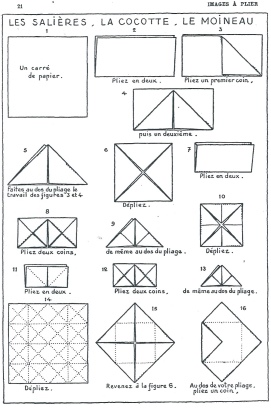
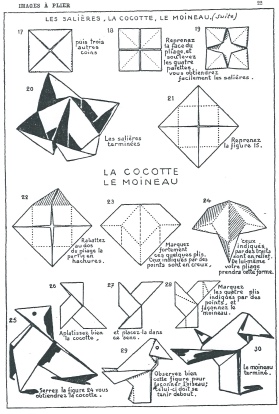
********** Les Salieres - The Salt Cellar / La Cocotte - The Cocotte / Pajarita / Le Moineau (The Sparrow) These diagrams previously appeared in 'L'Age Heureux' of 21st August 1930
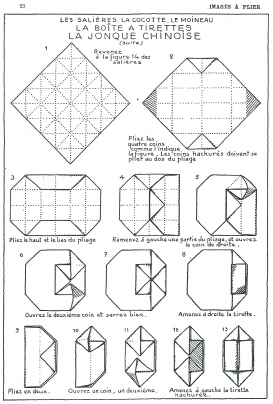
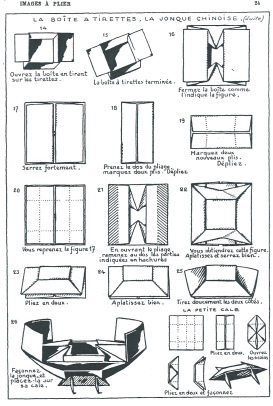
********** La Boite a Tirettes - The Junk Box / La Jonque Chinoise - The Chinese Junk / La Petite Cale (The Little Stand)
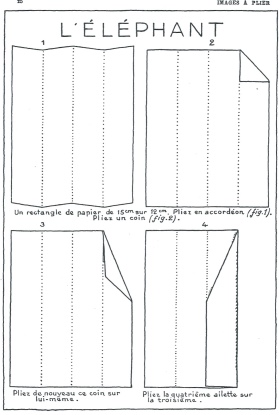
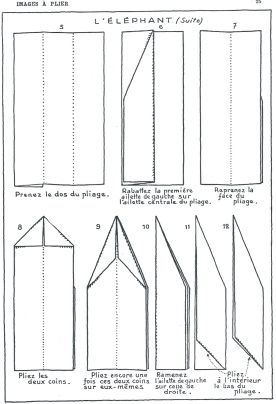
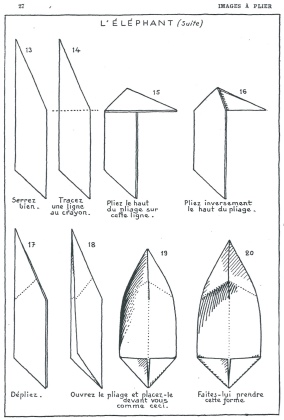
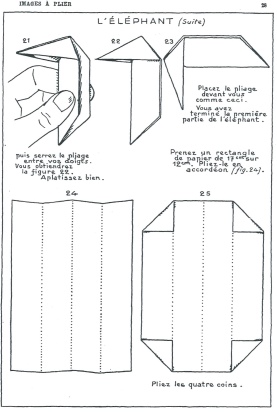
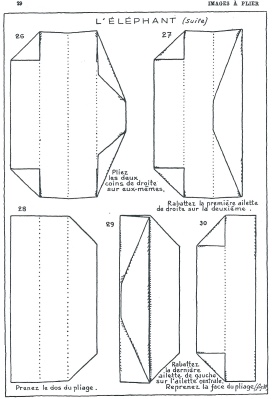
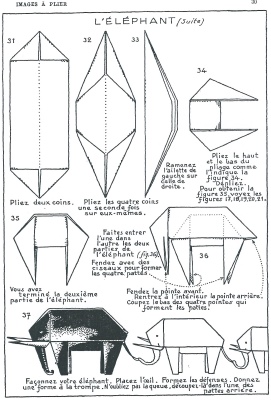
********** L'Elephant (made in two parts using cuts to create the legs, tusks and tail)
********** Booklet 3
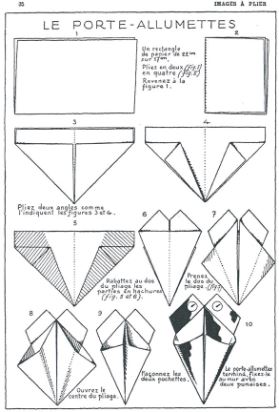
********** Le Porte-Allumettes (The Match Holder) These diagrams previously appeared in 'L'Age Heureux' of 18th September 1930
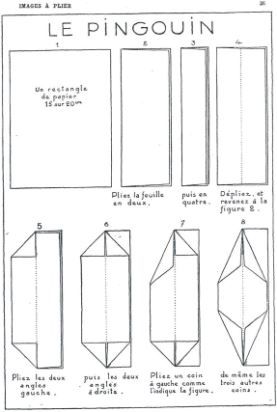
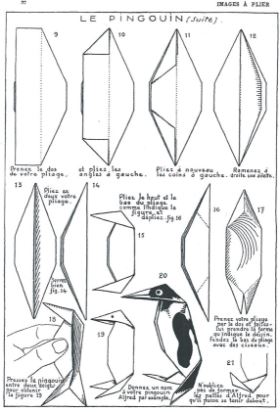
********** Le Pingouin (cut) A cut is used to separate the feet. These diagrams previously appeared in 'L'Age Heureux' of 20th February 1930
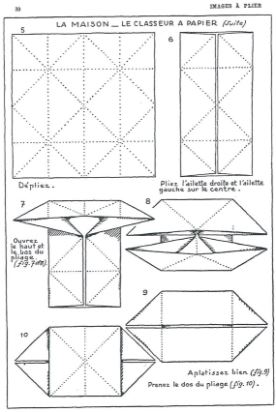
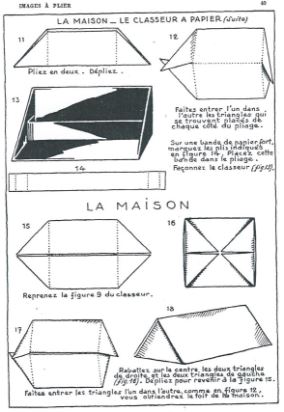
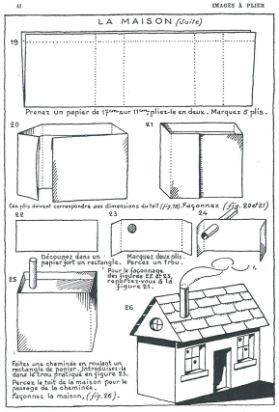
********** Le Classeur a Papier (The Paper Holder), La Maison (The House)
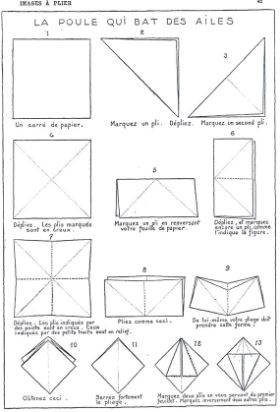
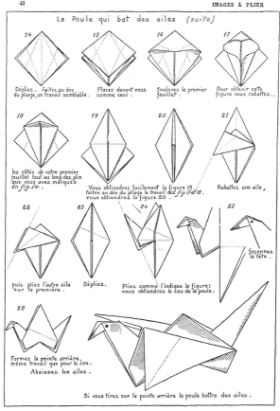
********** La Poule Qui Bat Des Ailes - The Flapping Bird These diagrams previously appeared in 'L'Age Heureux' of 15th August 1929
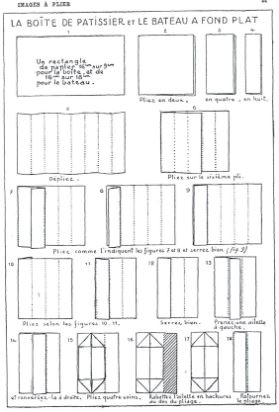
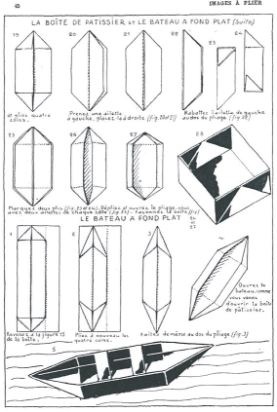
********** La Boite de Patissier - The Patisserie Box / Le Bateau a Fond Plat - The Flat-Bottomed Boat These diagrams previously appeared in 'L'Age Heureux' of 7th August 1930
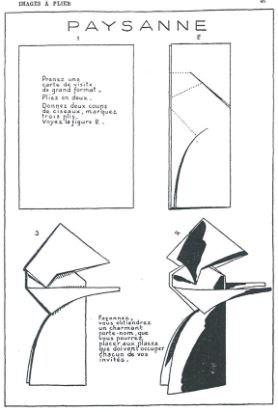
********** Paysanne (Peasant) - Soeur Rosalie (Fold, Slit and Fold design made from a visiting card) These diagrams previously appeared in 'L'Age Heureux' of 18th September 1930
********** Booklet 4
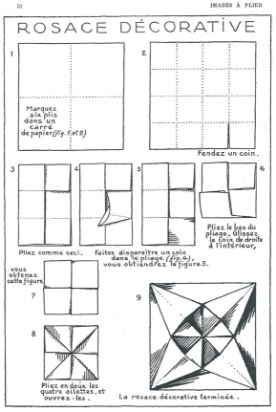
********** Rosace Decorative - The Interlocking Star A cut is made in step 4 to make it easy to make fold 5.
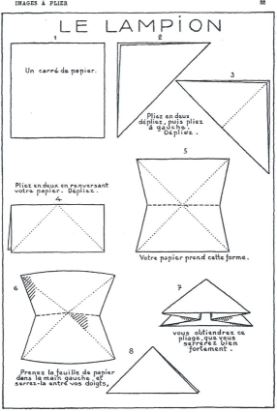
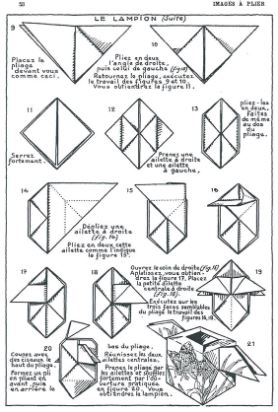
********** Le Lampion (The Lantern) / The Kettle
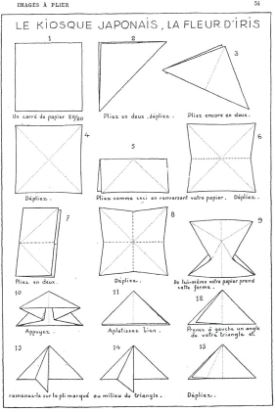
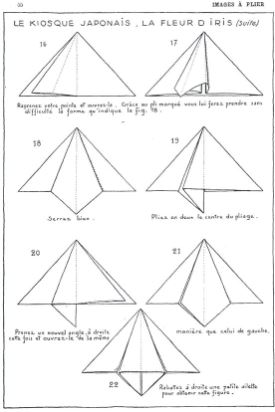
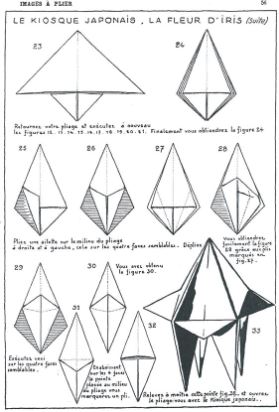
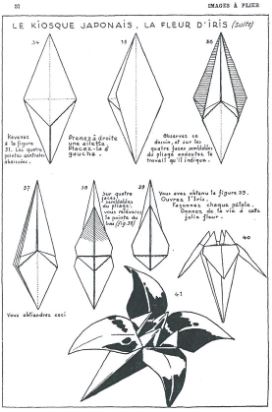
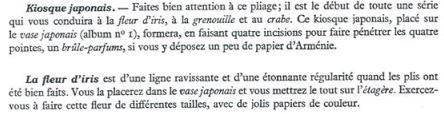
********** Le Kiosque Japonais / La Fleur d'Iris (The Lily) These diagrams previously appeared in 'L'Age Heureux' of 5th December 1929
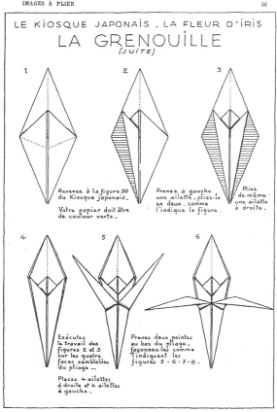
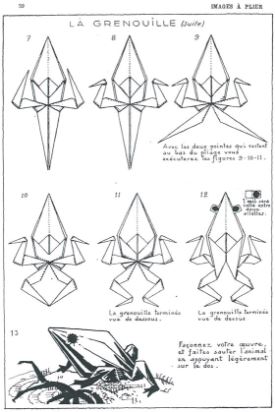
********** La Grenouille - The Inflatable Frog These diagrams previously appeared in 'L'Age Heureux' of 3rd April 1930
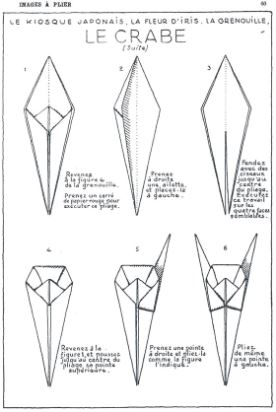
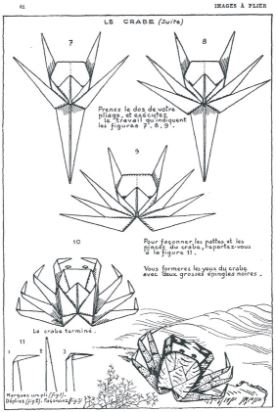
********** Le Crabe - The Cut Frog-Base Crab These diagrams previously appeared in 'L'Age Heureux' of 2nd October 1930
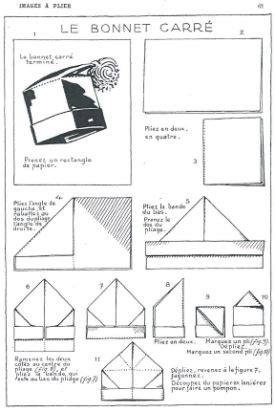
********** Le Bonnet Carre (The Square Cap)
********** Booklet 5
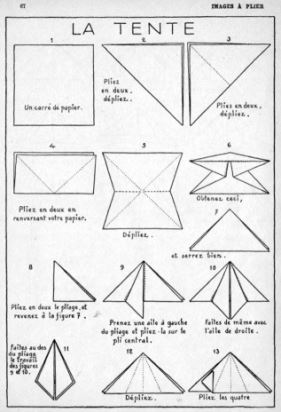
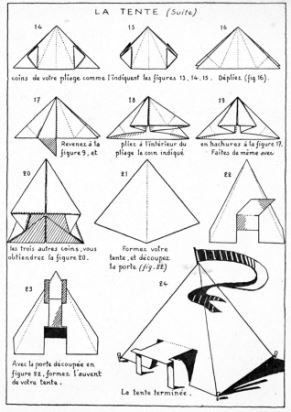
********** La Tente (The Tent) - The Cut Waterbomb Base Tent Cuts are used to create the opening and the canopy These diagrams previously appeared in 'L'Age Heureux' of 19th June 1930
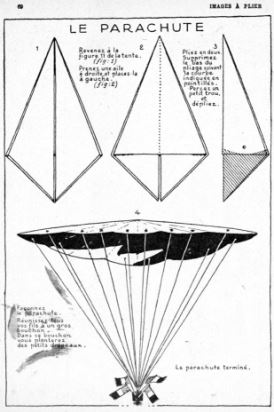
********** La Parachute - The Paper Parachute A cut is used to shape the parachute These diagrams previously appeared in 'L'Age Heureux' of 18th December 1930
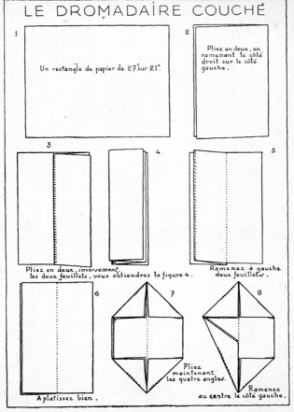
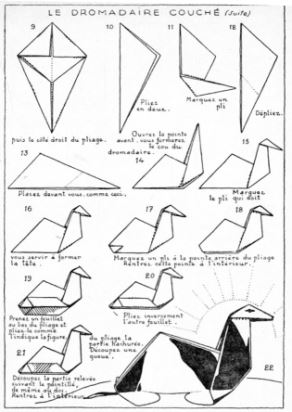
********** Le Dromedaire Couche (cut) (Seated Dromedary) Cuts are used to create the dromedary's legs / feet These diagrams previously appeared in 'L'Age Heureux' of 6th March 1930
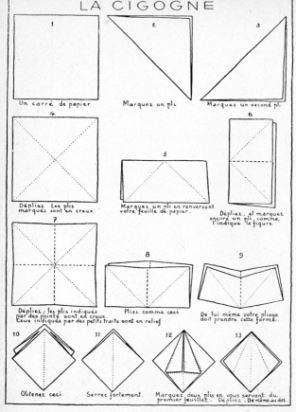
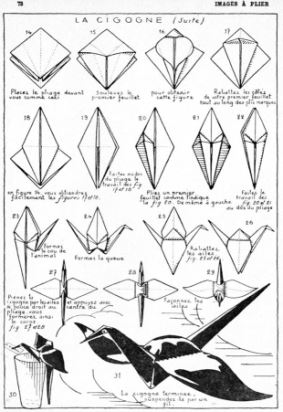
********** La Cigogne - The Paper Crane These diagrams previously appeared in 'L'Age Heureux' of 1st May 1930
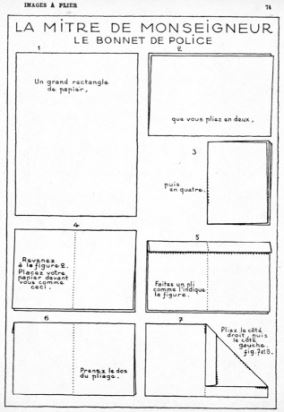
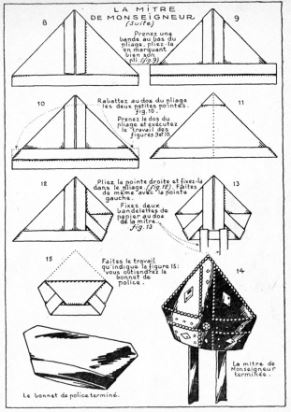
********** La Mitre de Monseigneur (cut) / Le Bonnet de Police / Purse - The Tuck-in Mitre Cuts are used to create the hanging cords of La Mitre de Monseigneur The text says that a purse is obtained by turning the Mitre upside down
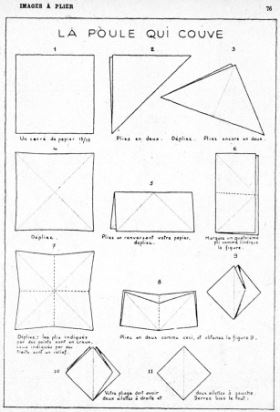
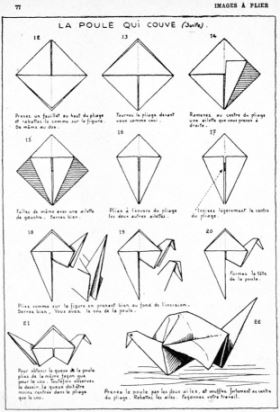
********** La Poule Qui Couve (The Laying Hen) - The Fat Sparrow These diagrams previously appeared in 'L'Age Heureux' of 2nd January 1930
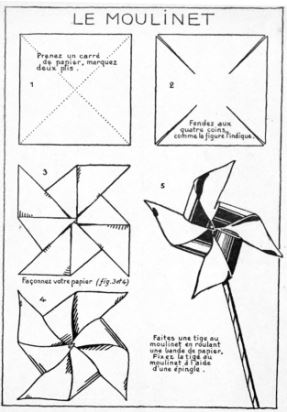
Note that the commentary says that this is 'another Japanese fold'. ********** Le Moulinet - The Cut and Fold Windmill
********** Booklet 6
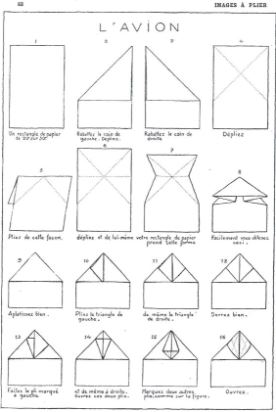
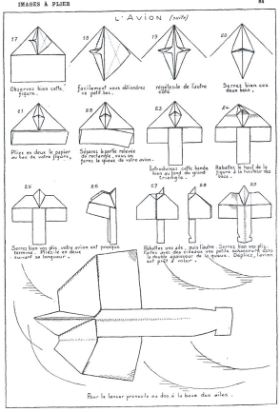
********** L'Avion - The Swallow Cuts are used to shape the tail These diagrams previously appeared in 'L'Age Heureux' of 1st August 1929
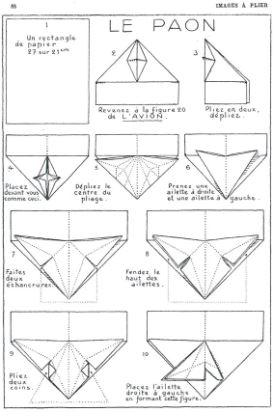
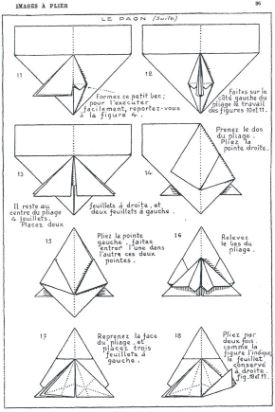
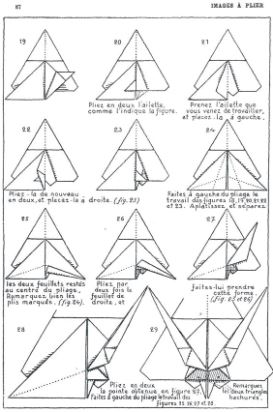
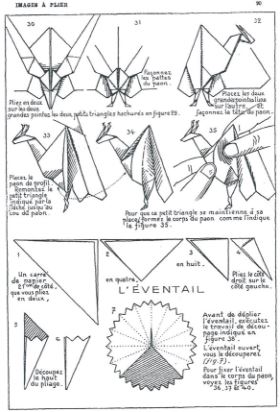
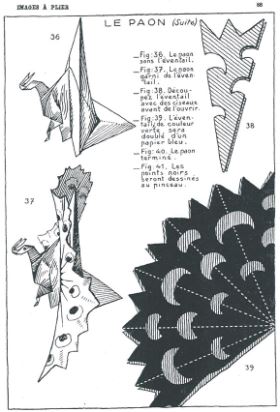
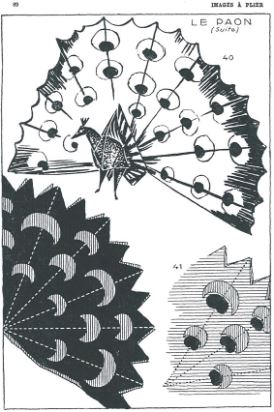
********** Le Paon (cut) (The Peacock) Cuts are used to thin the legs and to shape and decorate the tail. These diagrams previously appeared in 'L'Age Heureux,' of 20th November 1930 and 4th December 1930
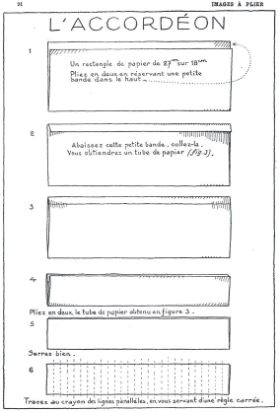
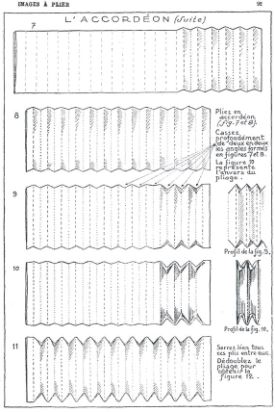
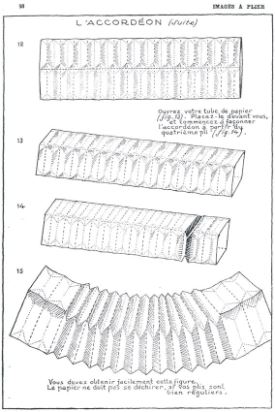
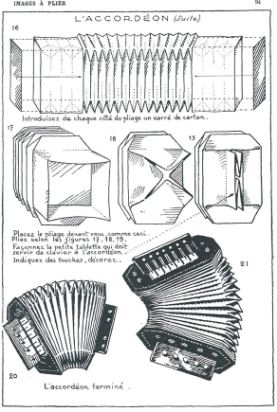
********** L'Accordeon
This wording suggests that this is a playground fold (if a rather complex one) rather than the invention of the author. ********** |
|||||||















 7
7